
What's Happening?
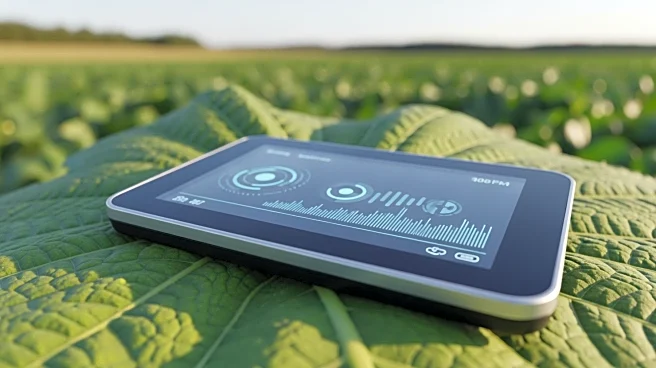
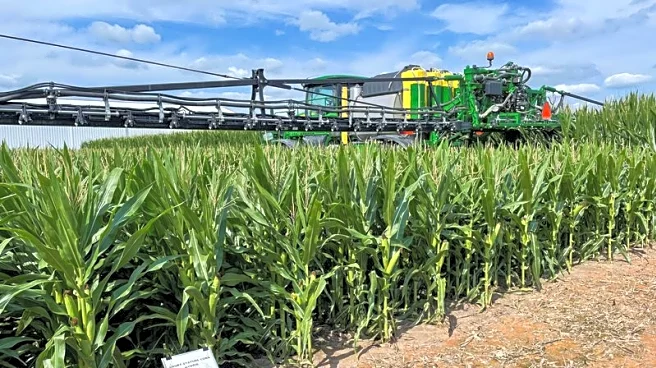
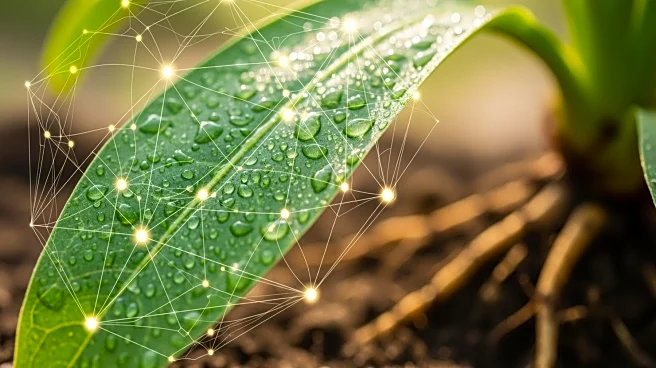
A research team from the University of Georgia, Iowa State University, and the University of Nebraska at Lincoln, funded by the USDA's National Institute of Food and Agriculture (NIFA), is developing a new farming tool that uses sensors, hardware, software, and machine learning to monitor plant and soil conditions in real-time. This technology aims to provide farmers with precise guidance on when and where to irrigate or fertilize, potentially reducing the overuse of resources like water and nitrogen fertilizer. The system is designed to make plant needs visible and actionable, allowing farmers to maintain productivity while using fewer resources. This innovation is particularly significant as it addresses the challenges of unpredictable farming conditions and the financial
pressures faced by farmers.
Why It's Important?
The development of this technology is crucial for several reasons. It offers a solution to the over-application of nitrogen fertilizer and water, which can lead to environmental issues such as algae blooms in water bodies and depletion of groundwater resources. By optimizing resource use, the technology can help protect drinking water supplies and reduce greenhouse gas emissions. Additionally, it provides a financial benefit to farmers by lowering input costs, which is particularly important in the face of increasing weather variability and economic pressures. The ability to respond to plant needs in real-time can also enhance crop resilience to climate change, ensuring food security and sustainability.