

What's Happening?
Maintenance, Repair, and Overhaul (MRO) facilities are re-evaluating their heating strategies for aircraft hangars in response to recent severe winter storms in the U.S. and rising utility costs. Traditional warm-air heating systems are proving inefficient
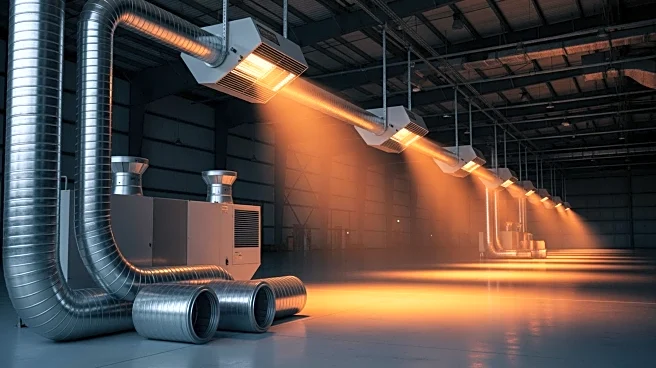
in large hangars, leading to energy waste and discomfort for technicians. Stephen Levy, CEO of Shadow Infrared Heating, advocates for radiant infrared systems that directly warm people and surfaces, maintaining temperature stability even when hangar doors are frequently opened. This approach addresses issues like thermal stratification and energy inefficiency, providing a more sustainable solution.
Why It's Important?
The shift towards more efficient heating systems in aircraft hangars is crucial for reducing operational costs and improving working conditions. As utility costs rise and sustainability becomes a priority, adopting systems that minimize energy waste and carbon impact is essential. This transition not only supports environmental goals but also enhances the comfort and productivity of technicians, which is vital for maintaining safety and efficiency in aircraft maintenance operations.
What's Next?
MROs considering retrofitting their heating systems may face installation challenges, but the benefits of radiant systems, such as zoning flexibility and reduced energy consumption, make them an attractive option. As more facilities adopt these systems, there could be a broader industry shift towards sustainable practices, potentially influencing regulatory standards and encouraging further innovation in hangar design and operation.