


What's Happening?
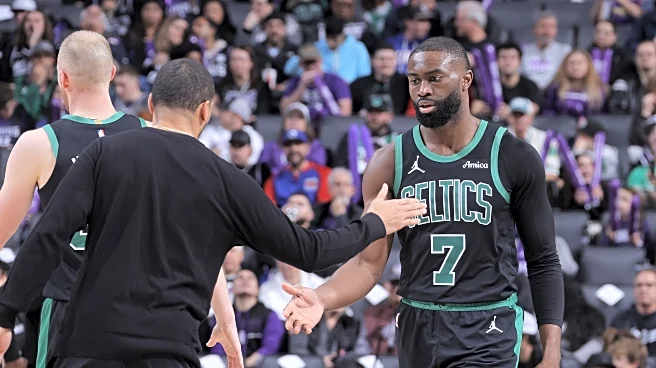
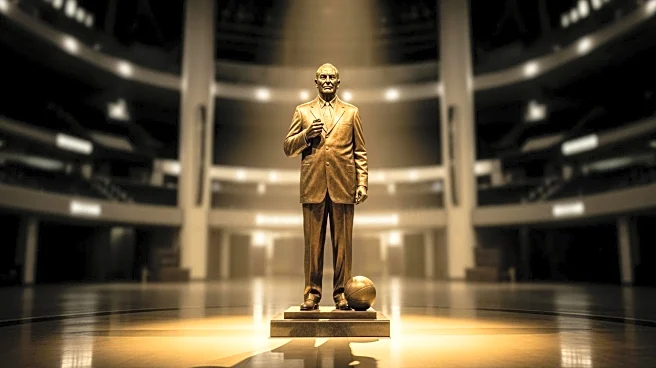
The Los Angeles Lakers are set to unveil a statue of Pat Riley outside the Crypto.com Arena, commemorating his significant contributions to the team as a coach. Riley, who led the Lakers to four NBA championships and seven Finals appearances during his nine-year tenure, is celebrated for his demanding coaching style and strategic acumen. Known for his 'Showtime' era leadership, Riley's influence extended beyond the court, inspiring players like Magic Johnson and Byron Scott to push their limits. The statue unveiling coincides with a game against the Boston Celtics, a nod to the historic rivalry and Riley's role in the Lakers' storied past.
Why It's Important?
Pat Riley's legacy with the Lakers is a cornerstone of the franchise's history, marking a period of dominance
in the 1980s. His coaching philosophy and work ethic set a standard for excellence, influencing not only his players but also the broader NBA coaching community. The statue serves as a physical reminder of his impact, inspiring future generations of players and fans. It also highlights the Lakers' tradition of honoring those who have significantly shaped the team's success, reinforcing the cultural and historical significance of the franchise in Los Angeles and the NBA.
What's Next?
The unveiling of Riley's statue is expected to draw significant attention from fans and former players, potentially sparking renewed interest in the Lakers' historical achievements. It may also lead to discussions about the legacy of other influential figures in the team's history, prompting further commemorations. The event could serve as a catalyst for the Lakers to continue celebrating their rich history, possibly influencing how other NBA teams honor their legends.
Beyond the Headlines
Riley's statue not only celebrates his achievements but also underscores the evolving nature of sports leadership and the importance of legacy in professional sports. It raises questions about how success is measured and remembered, and the role of public monuments in preserving sports history. The statue could also influence how future generations perceive the contributions of coaches and the impact of leadership styles on team dynamics and success.