







What's Happening?
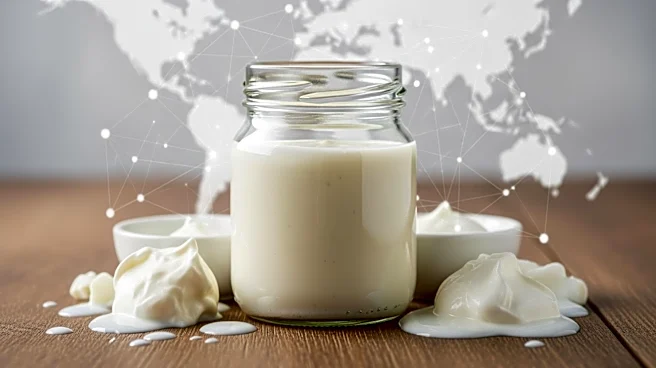
A comprehensive market study on dairy-based dressings in Latin America and the Caribbean has been released, providing insights into the market structure, supply chain challenges, and pricing dynamics. The report defines dairy-based dressings as emulsified,
spoonable, or pourable food dressings where dairy ingredients such as milk, cream, buttermilk, yogurt, and cheese form the primary base. The study highlights key inputs like fluid milk, cultured dairy products, and cheese, and identifies main supply bottlenecks including maintaining consistent quality of dairy raw materials and ensuring cold chain integrity. The report also outlines the pricing layers, which include commodity dairy input costs and clean-label certification premiums.
Why It's Important?
The findings of this report are significant for stakeholders in the dairy-based dressings market, including ingredient producers, processors, and distributors. Understanding the supply chain challenges and pricing dynamics is crucial for these stakeholders to navigate the market effectively. The report's insights into the demand architecture and supply logic can help businesses optimize their operations and improve their competitive positioning. Additionally, the analysis of regulatory and quality requirements provides valuable information for companies looking to ensure compliance and maintain product quality.
What's Next?
The report suggests that stakeholders should focus on addressing supply chain bottlenecks and optimizing pricing strategies to enhance market competitiveness. Companies may need to invest in improving cold chain logistics and processing capacities to meet the demand for high-viscosity, shear-sensitive products. Additionally, businesses should consider the implications of clean-label demand and adjust their product formulations accordingly. Strategic planning and investment in these areas could lead to better market positioning and increased profitability.
Beyond the Headlines
The report also touches on the broader implications of market dynamics, such as the impact of consumer preferences for clean-label and natural products on the dairy-based dressings market. As consumers become more health-conscious, there is a growing demand for products with recognizable ingredients and minimal additives. This trend could drive innovation in product formulations and influence the competitive landscape. Companies that can effectively respond to these consumer preferences may gain a competitive edge in the market.