
What's Happening?
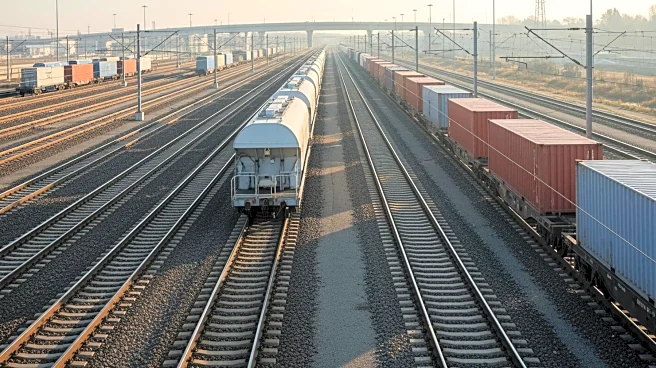
The Association of American Railroads (AAR) reported mixed results for U.S. rail carload and intermodal volumes for the week ending January 17. Rail carloads increased by 3.9% annually, reaching 224,783,
although this was a decrease from the previous week's 232,803. Notably, three out of ten tracked carload commodity groups saw annual gains: grain increased by 5,070 carloads to 25,786, nonmetallic minerals rose by 3,612 carloads to 28,232, and metallic ores and metals went up by 2,285 carloads to 19,973. Conversely, declines were observed in chemicals, motor vehicles and parts, and coal. Intermodal containers and trailers saw a 1.1% annual decrease, totaling 280,602, but this was an improvement over the previous weeks. Overall, for the first three weeks of 2026, rail carloads are up 10% year-over-year, and intermodal units have increased by 1.6%.
Why It's Important?
The mixed performance in rail carload and intermodal volumes reflects broader economic trends and can impact various sectors. The increase in certain commodity groups like grain and nonmetallic minerals suggests robust demand in those areas, potentially benefiting related industries such as agriculture and construction. However, declines in chemicals and automotive parts could indicate challenges in those sectors, possibly affecting manufacturing and supply chain operations. The overall growth in rail carloads and intermodal units suggests a recovering economy, which could lead to increased business activity and economic growth. Stakeholders in logistics, transportation, and industries reliant on rail transport will be closely monitoring these trends to adjust their strategies accordingly.
What's Next?
Future developments in rail and intermodal volumes will likely depend on economic conditions and industry-specific factors. Stakeholders may anticipate further fluctuations as they adapt to changing demand patterns and potential supply chain disruptions. The transportation sector might see strategic adjustments, such as optimizing routes and capacity, to better align with market needs. Additionally, policy changes or infrastructure investments could influence future rail and intermodal performance, impacting long-term planning for businesses and government agencies involved in transportation and logistics.