





What's Happening?
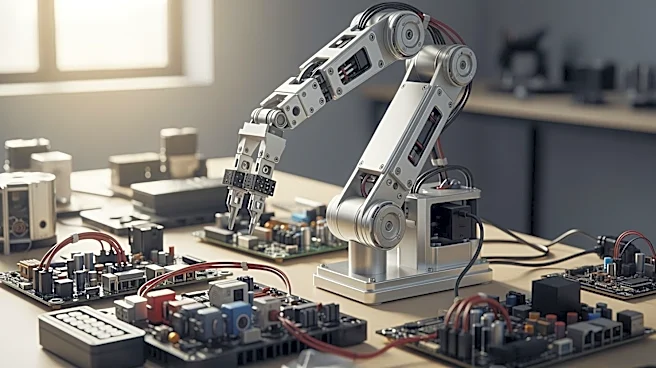
The robotics industry is experiencing a significant transformation due to the rise of open-source hardware platforms. These platforms, such as Arduino and Raspberry Pi, have drastically lowered the barriers to entry for robotics development. Historically,
building robots required substantial budgets and specialized engineering teams, but now, affordable microcontrollers, low-cost sensors, and open-source software have made it possible for students, researchers, startups, and hobbyists to create sophisticated robots at a fraction of the previous cost. This democratization of robotics is akin to the personal computer revolution, moving innovation from large institutions to individuals and smaller entities. The open-source ecosystem has accelerated innovation and expanded participation globally, allowing for more experimentation and investment in the field.
Why It's Important?
The democratization of robotics through open-source hardware has significant implications for the industry. By lowering costs and complexity, it enables a broader range of participants to engage in robotics development, fostering innovation and experimentation. This shift is crucial as it allows for the rapid expansion of the robotics ecosystem, attracting investment and encouraging the formation of startups. The availability of open-source platforms also means that educational institutions can provide hands-on experience to students, preparing a new generation of engineers and developers. Furthermore, the integration of open-source hardware with artificial intelligence is paving the way for advancements in embodied AI, which could revolutionize how robots interact with the physical world.
What's Next?
As open-source hardware continues to evolve, the next frontier involves integrating physical AI into robotics. This involves using AI to enhance robot learning, data generation, and simulation-driven training. Projects like LeRobot and Open X-Embodiment are creating new ecosystems around embodied AI, which could lead to robots that require less explicit programming and more data-driven training. The continued development of affordable robotic platforms will be essential for testing and deploying these emerging AI capabilities. The industry is likely to see further collaboration between open-source and proprietary systems, combining innovation with the robustness needed for industrial deployment.