



What's Happening?
MARA, a leading U.S.-listed cryptocurrency mining company, has recently sold a significant portion of its Bitcoin holdings, amounting to 15,133 bitcoins, generating approximately $1.1 billion. This move is part of MARA's strategic shift towards artificial
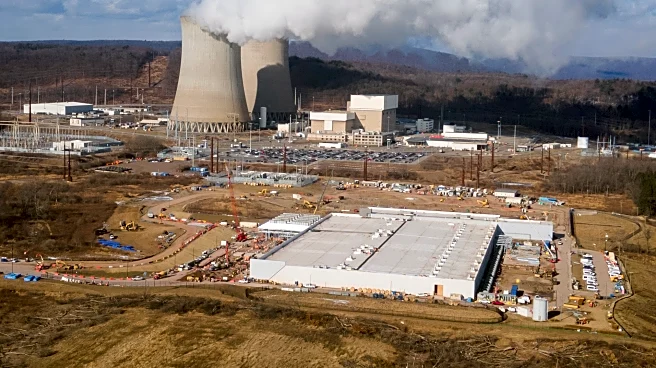
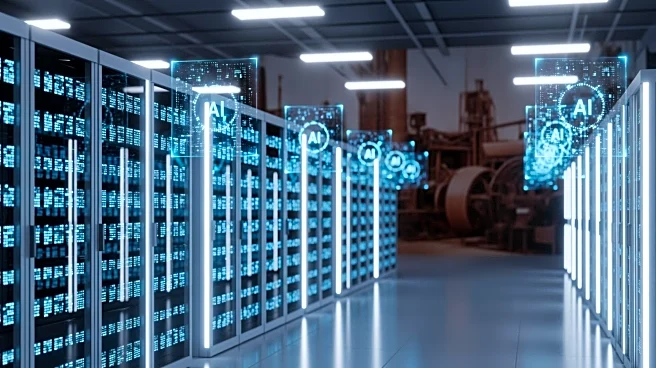
intelligence (AI) and high-performance computing (HPC) sectors. The company plans to use the funds to strengthen its balance sheet and expand its digital energy and AI operations. This decision comes as the Bitcoin mining industry faces profitability challenges, with the hash rate projected to fall and many mining rigs operating at a loss. MARA's transition includes partnerships to convert former mining sites into data centers for AI clients, reflecting a broader industry trend where mining companies are diversifying into AI to sustain their business models.
Why It's Important?
The shift by MARA and other mining companies towards AI signifies a critical transformation in the cryptocurrency mining industry. As profitability from Bitcoin mining declines due to increased operational costs and lower returns, companies are compelled to explore alternative revenue streams. This transition could have significant implications for the U.S. economy, particularly in the tech and energy sectors, as it may lead to increased investments in digital infrastructure and AI technologies. The move also highlights the growing importance of AI in various industries, potentially driving innovation and economic growth. However, the high costs associated with this transformation pose financial risks, forcing companies to liquidate assets to fund their new ventures.
What's Next?
As MARA and other mining companies continue to pivot towards AI, the industry may see further consolidation, with companies either becoming energy producers or partnering with them to secure reliable electricity resources. This strategic shift could lead to a redefinition of the mining industry, with a focus on digital infrastructure and AI services. The success of these transformations will depend on the companies' ability to manage costs and secure necessary resources. Additionally, the broader adoption of AI technologies could spur regulatory and policy discussions around data privacy, security, and the ethical use of AI, influencing future industry standards and practices.