



What's Happening?
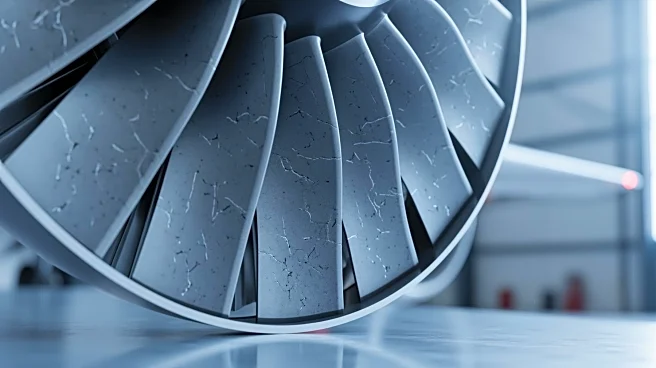
At the AeroEngines Americas conference, Chris Celtruda, CEO of Chromalloy, highlighted the reliability challenges facing the latest generation of single-aisle airliner engines. Despite their fuel efficiency, these engines, used in models like the Airbus A320neo and Boeing 737 MAX, are experiencing lower-than-expected reliability. This has led to increased maintenance costs, potentially negating the fuel savings they offer. The engines, including CFM International's Leap-1 and Pratt & Whitney's PW1000G, are undergoing frequent shop visits and retrofits to address these issues. Both manufacturers are working on improvements, with CFM implementing a multi-year upgrade plan and Pratt & Whitney reducing the number of grounded A320neos.
Why It's Important?
The reliability
issues with new airliner engines have significant implications for the aviation industry. Airlines may face increased operational costs due to more frequent maintenance, which could offset the benefits of improved fuel efficiency. This situation could impact airline profitability and influence future purchasing decisions. The ongoing efforts by engine manufacturers to enhance durability are crucial for maintaining customer trust and ensuring the long-term viability of these advanced engines. The challenges also underscore the complexity of balancing technological advancements with operational reliability in the aerospace sector.