

What's Happening?
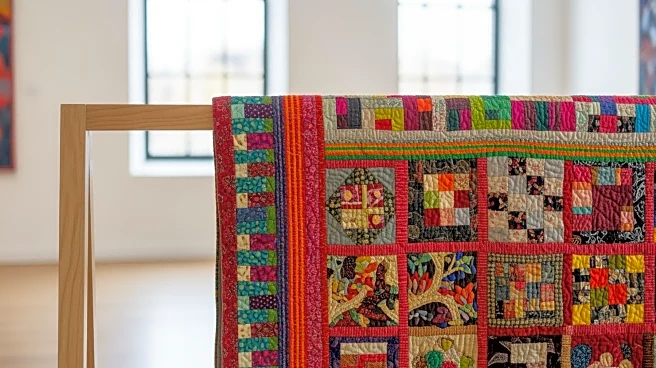
Ari Emanuel, the billionaire owner of the Frieze art fairs, made headlines by being the first collector to enter the Los Angeles edition of the fair, acquiring three quilts by Yvonne Wells before the VIPs arrived. Emanuel's early entry allowed him to purchase
the artworks from the Fort Gansevoort gallery, which featured a solo presentation by Wells, an 86-year-old Black quiltmaker from Tuscaloosa, Alabama. The fair, held at the Santa Monica Airport, showcased around 100 galleries from 22 countries, attracting local collectors and celebrities like Emma Watson. Emanuel's acquisitions included quilts depicting iconic figures such as Michael Jackson, Marilyn Monroe, and Elvis Presley, priced between $50,000 and $60,000. The purchase aligns with Emanuel's focus on historical and contemporary Black art, as well as works by female artists.
Why It's Important?
Ari Emanuel's acquisition of Yvonne Wells' quilts highlights the growing interest in Black and female artists within the art market. Emanuel's actions reflect a broader trend of collectors seeking diverse and historically significant artworks, which can influence market dynamics and the visibility of underrepresented artists. The Frieze art fair, a major event in the contemporary art scene, serves as a platform for these artists to gain recognition and potentially increase their market value. Emanuel's involvement also underscores the role of influential collectors in shaping art collections and museum exhibits, as he has been advised by Jeffrey Deitch, a prominent figure in the art world. This development may encourage other collectors to explore similar avenues, thereby diversifying the art market further.
What's Next?
The Frieze Los Angeles art fair continues through Sunday, offering more opportunities for collectors to acquire significant artworks. As Emanuel's acquisitions gain attention, other collectors may follow suit, potentially leading to increased demand for works by Black and female artists. The fair's success could influence future editions, encouraging galleries to feature more diverse artists. Emanuel's focus on these artists may also impact his future acquisitions and the exhibitions at institutions he is involved with, such as the Museum of Contemporary Art in Los Angeles. The art market may see a shift towards more inclusive representation, driven by influential collectors like Emanuel.
Beyond the Headlines
Emanuel's purchase of quilts by Yvonne Wells not only highlights the importance of diversity in art collections but also raises questions about the accessibility of art fairs to different audiences. While VIPs and high-profile collectors have early access, the broader public may miss out on significant artworks. This dynamic can affect the visibility and market value of artists who rely on public engagement. Additionally, Emanuel's focus on Black and female artists may inspire other collectors to reassess their collections, potentially leading to a more equitable art market. The cultural significance of Wells' quilts, which depict iconic figures, also invites discussions on the intersection of art, history, and identity.