





What's Happening?
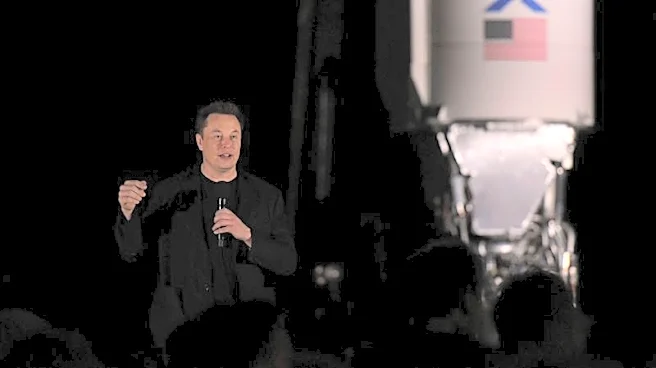
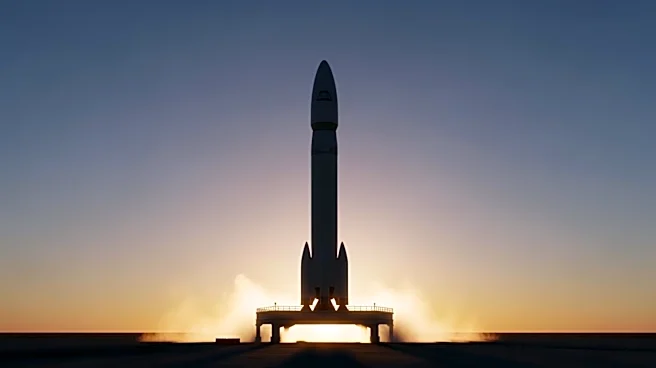
SpaceX is set to launch the Starship V3 on May 19, 2026, marking the 12th flight of the Starship and the first of the new V3 version. This launch, taking place from Starbase in Boca Chica, Texas, will feature 22 simulated Starlink satellites and a redesigned
Booster 19 with three larger grid fins. The Federal Aviation Administration (FAA) has authorized this launch, which is crucial for future missions to the Moon and Mars. The V3 version includes structural improvements such as new cryogenic valves, an updated thermal shield, and upgraded Raptor engines. The redesigned grid fins aim to improve stability during reentry and reduce manufacturing complexity. This test flight will not attempt to capture the upper or first stage, focusing instead on validating new technologies.
Why It's Important?
The debut of the Starship V3 is significant for both NASA's Artemis program and the U.S. military's logistics capabilities. NASA plans to use Starship variants for the Artemis III mission to the Moon, with potential manned landings as early as 2027. The U.S. Air Force's Rocket Cargo program is also exploring the use of Starship for rapid global transport, which could provide a strategic advantage. The V3's increased cargo capacity and reduced launch costs could revolutionize space logistics, making it a pivotal development in the aerospace industry.
What's Next?
Following the test flight, SpaceX plans to conduct additional flights to further validate the V3's capabilities. The FAA will review the test results within 30 days, potentially allowing for 4 to 6 more Starship missions in 2026. These missions will continue to test and refine the technologies needed for future human spaceflight certifications. The success of these tests will be crucial for meeting NASA's and the military's timelines for deploying Starship in operational roles.