


What's Happening?
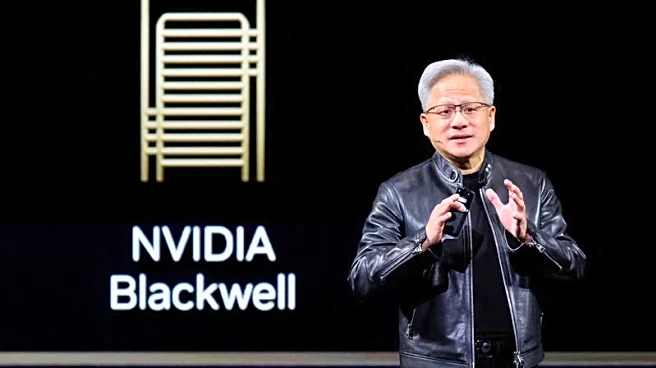
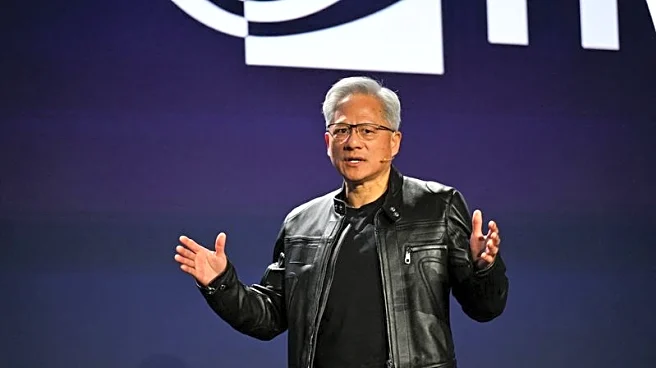
During the GTC 2026 conference, Nvidia CEO Jensen Huang presented a vision for the future of AI, emphasizing the monetization of inference at scale through AI tokens. Huang described tokens as the core unit of value, transforming data centers into revenue-generating
factories. Nvidia's Blackwell platform, soon to be surpassed by the Rubin series, aims to optimize systems for profitability rather than raw compute power. Huang highlighted the importance of token efficiency, suggesting that AI tokens could redefine business models across industries. The concept of tiered token delivery was introduced, where 'AI factories' would monetize and maximize AI performance per watt.
Why It's Important?
Huang's introduction of AI token economics represents a paradigm shift in how AI infrastructure and economics are perceived. By positioning tokens as a commodity, Nvidia is setting the stage for a new operating model that could impact various sectors, including telecommunications, cloud computing, and enterprise software. This approach could lead to increased efficiency and profitability for companies leveraging AI technologies. The focus on token efficiency underscores the potential for AI to drive significant economic value, influencing investment strategies and technological advancements.
What's Next?
As Nvidia continues to develop its AI infrastructure, the implementation of token economics may lead to changes in how companies approach AI investments and operations. The concept of AI tokens as a commodity could influence pricing models and competitive dynamics within the tech industry. Nvidia's upcoming Rubin platform is expected to further enhance AI capabilities, potentially leading to new applications and business opportunities. Stakeholders across industries may need to adapt to this evolving landscape, considering the implications of token-based AI systems.