




What's Happening?
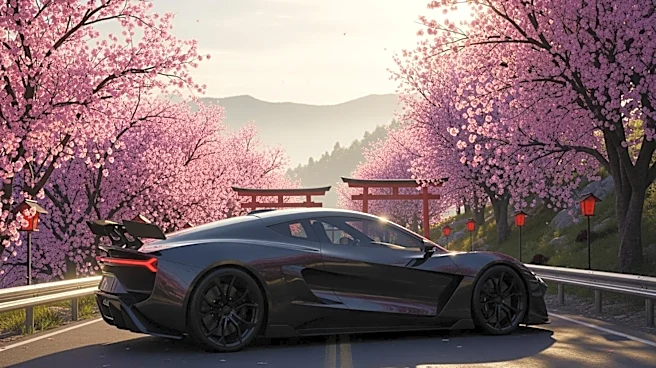
Forza Horizon 6 has recently launched its early access window, prompting a wave of GPU benchmarks in the PC hardware community. The game is noted for its impressive optimization, running above 60fps at 1080p max settings on older hardware like the RTX
2080 Ti. The game also supports ray tracing, with mixed reviews on its effectiveness. Digital Foundry praised the RTGI feature for enhancing light propagation in urban environments, while PC Gamer advised against enabling it due to the high performance cost. The game utilizes the ForzaTech engine, which heavily uses up to 10 CPU threads, and demands around 12GB of VRAM at extreme settings, posing challenges for 8GB cards.
Why It's Important?
The launch of Forza Horizon 6 is significant as it showcases a well-optimized PC release, capable of running on a wide range of hardware. This is crucial for gamers who do not possess the latest technology, as it allows them to enjoy new titles without needing immediate hardware upgrades. The game's performance on integrated graphics and older GPUs highlights its scalability, making it accessible to a broader audience. Additionally, the mixed reception of the ray tracing feature underscores the ongoing debate about the balance between visual fidelity and performance in gaming.
What's Next?
As Forza Horizon 6 continues to roll out, further updates and patches may address the current performance bottlenecks, particularly concerning ray tracing and VRAM usage. Gamers and hardware enthusiasts will likely continue to test and optimize settings to achieve the best balance between performance and visual quality. The game's performance on handheld devices like the Steam Deck will also be of interest, potentially influencing future game development and optimization strategies for portable gaming platforms.