



What's Happening?
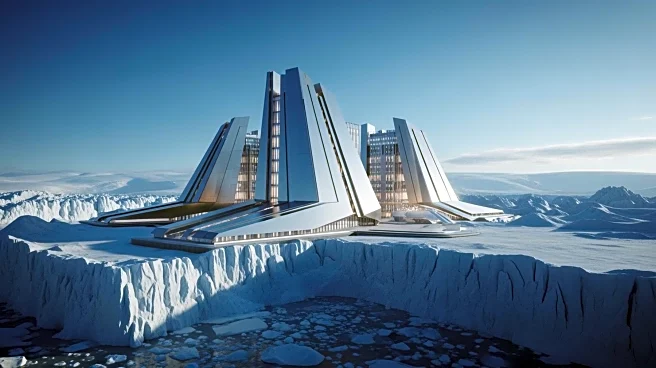
A former official from President Trump's first administration is spearheading a multi-billion-dollar data center project in Greenland. The initiative, led by Drew Horn, CEO of GreenMet, aims to establish a data center with a capacity of 1.5 gigawatts by the end of 2028. The project is part of a global effort by major tech companies to expand data center capacities to support the growing demands of AI technologies. The data center is planned to be operational at 300 megawatts by mid-2027, with further expansion to follow. Despite securing technical partners and investor commitments for half of the initial and final phases, the project still requires planning permission and land acquisition in Greenland.
Why It's Important?
This development is significant as it highlights
the increasing global competition to build infrastructure capable of supporting AI workloads. The project underscores the strategic importance of Greenland, not only for its geographical location but also for its potential in hosting large-scale data centers. The involvement of a former Trump administration official adds a political dimension, reflecting ongoing U.S. interests in the Arctic region. The data center could potentially boost local economies and create jobs, but it also raises questions about environmental impacts and the logistical challenges of operating in such a remote area.
What's Next?
The next steps for the project include securing the necessary planning permissions and land from Greenlandic authorities. As the project progresses, it will likely attract attention from environmental groups and local communities concerned about the ecological and social impacts. Additionally, the geopolitical implications of increased U.S. presence in Greenland may prompt reactions from other nations with interests in the Arctic. The project's success will depend on navigating these complex challenges while meeting the technical and financial milestones set by its backers.
Beyond the Headlines
Beyond the immediate economic and geopolitical implications, the project could set a precedent for future developments in the Arctic region. It raises ethical questions about the balance between technological advancement and environmental stewardship. The reliance on Greenland's limited infrastructure and the potential strain on local resources highlight the need for sustainable development practices. Furthermore, the project could influence global data center strategies, encouraging other companies to explore unconventional locations for their infrastructure needs.