







What's Happening?
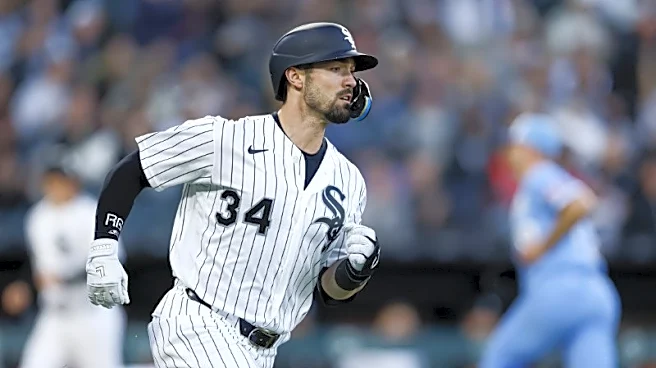
An MLB executive has humorously refused to admit he was wrong about Chicago White Sox slugger Munetaka Murakami, despite the player's impressive performance this season. Initially, there were concerns about Murakami's high strikeout rate and inconsistencies
at the plate, leading some teams to hesitate in pursuing him during the offseason. However, the White Sox took a chance on Murakami, and he has since proven his doubters wrong with a strong offensive output, including 15 home runs and a .227 batting average. The executive, who was part of a team that considered signing Murakami, jokingly stated that he might admit his mistake in the future, acknowledging that his initial assessment of Murakami's potential was incorrect.
Why It's Important?
Murakami's success highlights the risks and rewards associated with player evaluations in professional sports. It underscores the importance of taking calculated risks in talent acquisition, as well as the potential for players to exceed expectations despite initial doubts. For the White Sox, Murakami's performance is a significant asset, contributing to the team's competitive edge. This situation also reflects the broader dynamics of decision-making in sports management, where executives must balance statistical analysis with intuition and potential. The story serves as a reminder of the unpredictable nature of sports and the potential for players to defy expectations.