


What's Happening?
Saronic Technologies has announced the successful closure of a $1.75 billion Series D funding round, valuing the company at $9.25 billion. This funding, led by Kleiner Perkins, aims to enhance Saronic's mission of advancing maritime autonomy for the U.S.
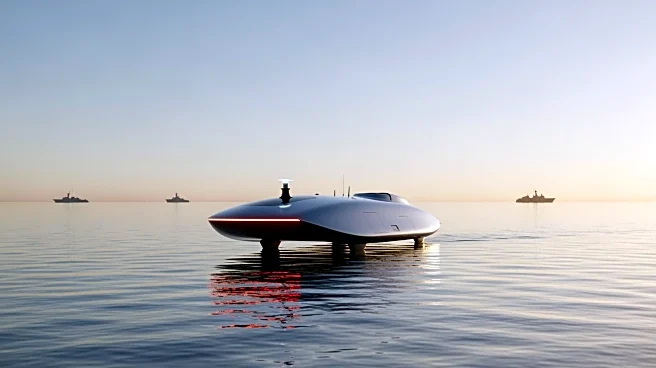
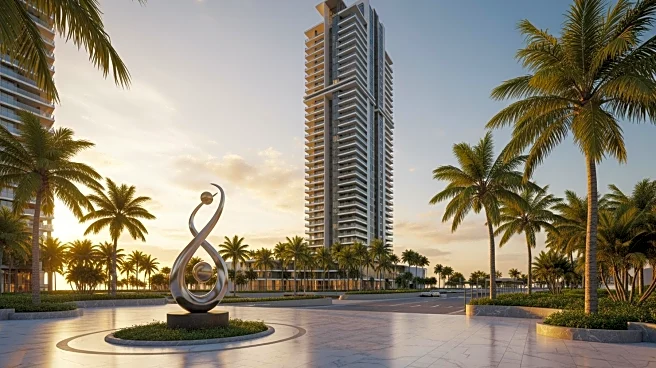
and its allies. The company plans to use the capital to expand its shipbuilding capabilities, particularly through the development of Port Alpha, a next-generation shipyard, and the expansion of existing facilities in Louisiana and Texas. Saronic's focus is on producing autonomous ships at scale, which is seen as crucial for maintaining industrial strength and maritime superiority. The funding will also support the production of Saronic's autonomous surface vessels and AI-driven maritime capabilities, addressing the growing demand for advanced maritime platforms.
Why It's Important?
The funding round is significant as it underscores the strategic importance of maritime autonomy in global security and economic competition. By enhancing its shipbuilding capacity, Saronic is poised to play a pivotal role in revitalizing the U.S. shipbuilding industry, which has seen a decline in recent decades. The ability to produce advanced autonomous ships at scale is expected to bolster the U.S.'s ability to project power and protect trade routes. This development is likely to create numerous high-quality jobs and stimulate economic growth in regions like Louisiana and Texas. Furthermore, the expansion of Saronic's capabilities could lead to increased collaboration with the U.S. government and allied nations, strengthening defense and commercial maritime operations.
What's Next?
Saronic plans to rapidly scale its production of autonomous vessels, including the 24-foot Corsair and the 180-foot Marauder, to meet the increasing demand from U.S. and allied customers. The company is also exploring solutions for challenges in the maritime domain, including those at the intersection of surface and subsurface operations. With the new funding, Saronic aims to continue its momentum from 2025, which included significant growth and a $392 million production contract with the U.S. Navy. The expansion of its facilities and workforce is expected to further solidify its position as a leader in autonomous maritime systems.