







What's Happening?
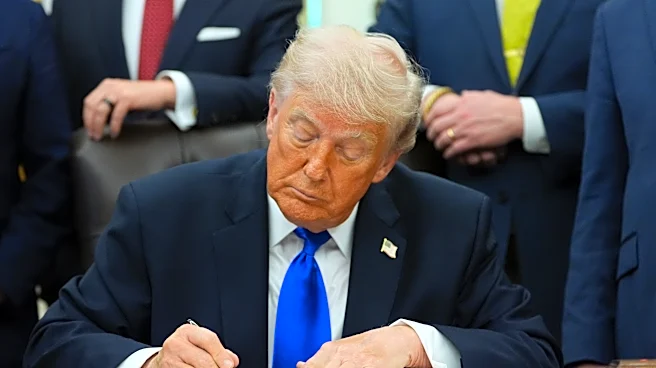
President Trump has announced a new 25% tariff on cars and trucks imported from the European Union, set to take effect next week. This move is part of an ongoing trade dispute, with Trump accusing the EU of not complying with a trade deal agreed upon
in July. The original agreement included a 15% tariff on most EU products, with the EU agreeing to eliminate tariffs on U.S. industrial goods. The tariff increase is expected to impact major European vehicle exporters, including Germany, Slovakia, and Italy. EU officials have criticized the U.S. for breaching the agreement, highlighting the challenges in U.S.-EU trade relations.
Why It's Important?
The imposition of higher tariffs on European vehicles could have significant economic consequences, particularly for the European automotive industry, which exports billions of dollars worth of vehicles to the U.S. annually. The increased tariffs may lead to higher costs for European manufacturers and potentially higher prices for U.S. consumers. This development could also strain diplomatic relations between the U.S. and EU, potentially leading to retaliatory measures from the EU. The situation underscores the complexities of international trade agreements and the potential for economic disruption when disputes arise.
What's Next?
The EU is likely to engage in diplomatic efforts to address the tariff increase and seek a resolution to the trade dispute. The European Commission may explore legal options or consider counter-tariffs to protect EU interests. The U.S. administration may face pressure from domestic industries affected by potential EU retaliatory measures. The situation could lead to further negotiations or adjustments to the trade deal to prevent further economic fallout.