



What's Happening?
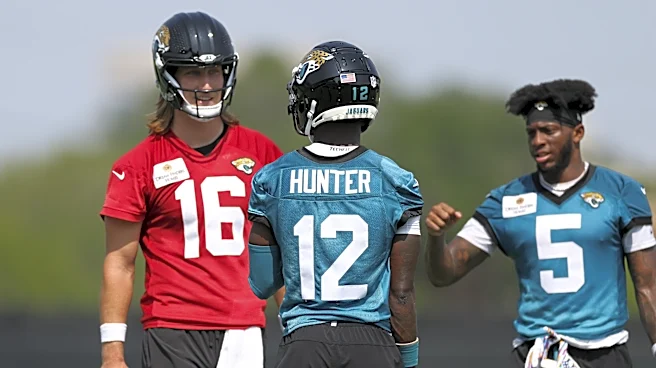
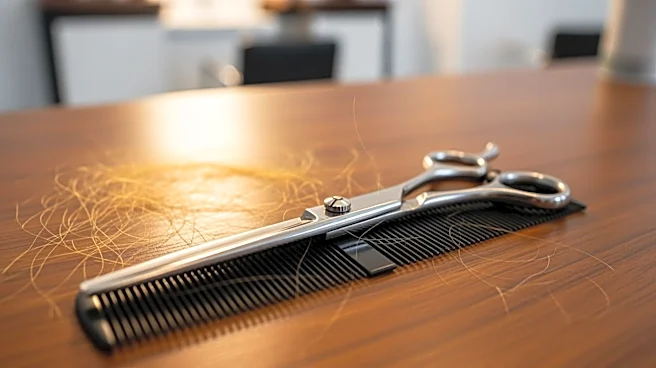
Jacksonville Jaguars quarterback Trevor Lawrence was at the center of a social media buzz following a deep fake video released by the team. The video, part of the team's schedule release, depicted Lawrence getting his iconic long blond hair cut, which
turned out to be a digitally altered scene. The video, titled 'The Cut,' quickly went viral, amassing nearly 4 million views on X, formerly known as Twitter. Lawrence clarified that the haircut was not real, and the team later released behind-the-scenes footage showing Lawrence being fitted with a wig for the video. Despite the convincing nature of the deep fake, Lawrence assured fans that he has no plans to change his hairstyle, especially after a successful season where he threw for over 4,000 yards and 29 touchdowns.
Why It's Important?
The incident highlights the growing sophistication and potential impact of deep fake technology in sports and media. While this instance was a harmless prank, it underscores the challenges in distinguishing real from fake content, particularly for older audiences less familiar with digital manipulation. The viral nature of the video also demonstrates the power of social media in amplifying such content, which can influence public perception and fan engagement. For the Jaguars, the video served as an effective marketing tool, drawing significant attention to the team's upcoming season and engaging fans in a lighthearted manner.
What's Next?
As the Jaguars prepare for the new NFL season, they aim to build on last year's success, having retained most of their starting lineup. The team is also dealing with the absence of newly signed running back Chris Rodriguez, who missed the first voluntary workout. Coach Liam Coen has not provided details, indicating that an injury report will be forthcoming. Meanwhile, the team continues to leverage social media and digital content to engage with fans and maintain interest in the offseason.