






What's Happening?
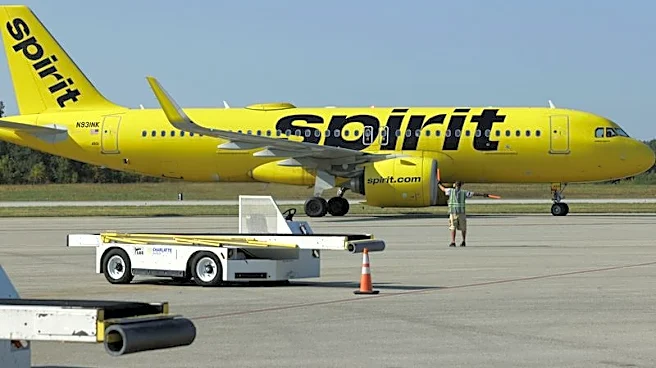
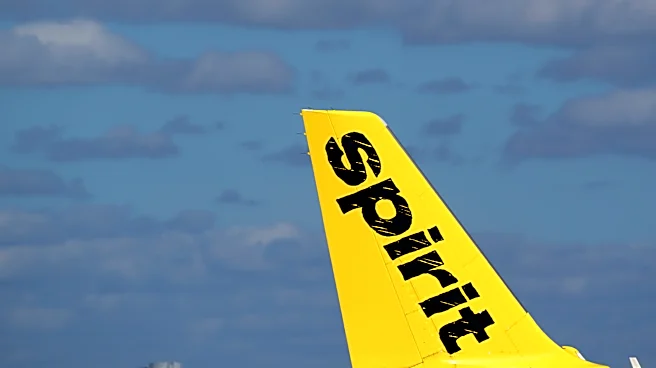
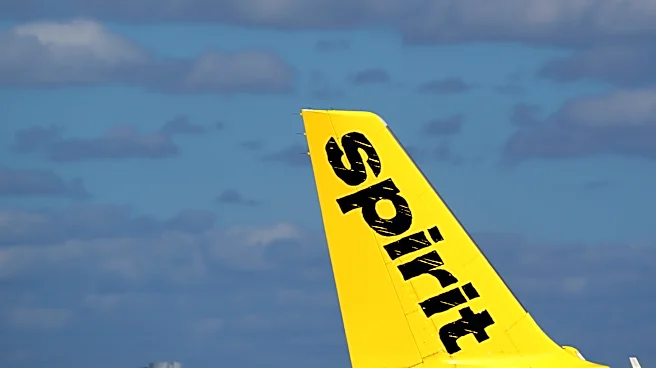
President Donald Trump has expressed interest in acquiring Spirit Airlines using taxpayer funds, with the intention of reselling the airline for a profit once oil prices decrease. This approach, discussed during a meeting at the Oval Office, is seen as an
alternative to a traditional bailout. Trump emphasized that the acquisition would be virtually debt-free, given Spirit Airlines' current financial struggles, including multiple bankruptcy filings and failed merger attempts. The plan involves stabilizing the airline, preserving jobs, and maintaining competition in the airfare industry. Trump noted that the airline's financial difficulties are partly due to rising operational costs linked to increased jet fuel prices amid geopolitical tensions. The strategy includes appointing a competent leader to manage the airline until it becomes a valuable asset again.
Why It's Important?
The potential acquisition of Spirit Airlines by the government under President Trump's plan could have significant implications for the U.S. airline industry and taxpayers. By intervening in the market, the government aims to preserve jobs and ensure competition among airlines, which could benefit consumers through lower fares. However, the use of taxpayer funds for such a venture raises concerns about government involvement in private enterprise and the risks associated with managing a commercial airline. The success of this plan hinges on the ability to resell the airline at a profit, which depends on fluctuating oil prices and market conditions. The move also reflects broader economic strategies during times of financial distress, highlighting the balance between government intervention and market forces.
What's Next?
If President Trump proceeds with the acquisition, the next steps would involve finalizing the terms of the deal and appointing a management team to oversee Spirit Airlines. The administration would need to navigate legal and regulatory hurdles associated with such a transaction. Additionally, the plan's success would depend on market conditions, particularly oil prices, which influence airline profitability. Stakeholders, including airline employees, industry competitors, and taxpayers, will closely monitor developments. The outcome could set a precedent for future government interventions in struggling industries, influencing policy decisions and public opinion on the role of government in the economy.