



What's Happening?
The maritime industry is focusing on enhancing passenger safety through a structured approach known as the 'hierarchy of controls.' This system prioritizes eliminating hazards, followed by substitution, engineering controls, administrative controls, and
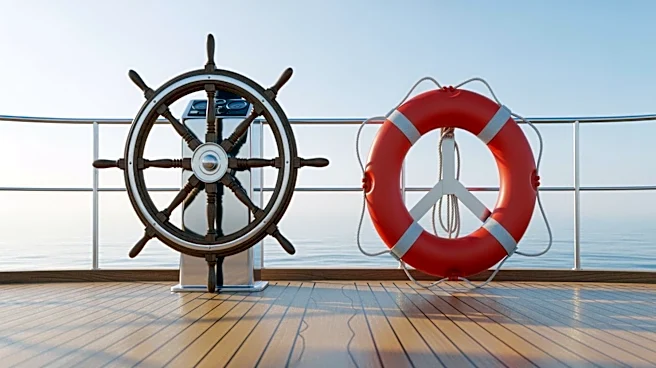
personal protective equipment (PPE). Companies like Survitec, Consilium, Lalizas, and Viking are at the forefront of implementing these controls. Survitec, known for its life rafts and marine survival technology, provides administrative controls through training and equipment maintenance. Consilium focuses on engineering controls with its AI-integrated fire detection systems. Lalizas and Viking are leaders in providing PPE, such as life rafts and immersion suits, ensuring safety at sea. These companies are also investing in innovation and education to elevate safety standards across commercial and recreational voyages.
Why It's Important?
The implementation of the hierarchy of controls in the maritime industry is crucial for enhancing safety standards and protecting passengers and crew. By prioritizing hazard elimination and substitution, the industry can reduce risks associated with maritime travel. Engineering controls, such as AI-driven fire detection systems, provide real-time monitoring and response capabilities, significantly improving safety outcomes. Administrative controls, including training and maintenance, ensure that crew members are prepared to handle emergencies effectively. PPE serves as the last line of defense, offering essential protection in hazardous situations. The focus on safety not only protects lives but also supports the maritime industry's reputation and operational continuity, especially in the wake of challenges like the COVID-19 pandemic.
What's Next?
The maritime industry is expected to continue investing in advanced safety technologies and training programs. Companies like Survitec are working on automation solutions for the small ferry market and introducing new marine evacuation systems. Consilium plans to enhance its AI capabilities to further improve risk detection and management. The ongoing development of innovative safety equipment and protocols will likely lead to stricter safety regulations and standards. As these advancements are implemented, the industry may see increased collaboration between safety technology providers and maritime operators to ensure comprehensive safety measures are in place.
Beyond the Headlines
The focus on maritime safety through the hierarchy of controls highlights the industry's commitment to proactive risk management. This approach not only addresses immediate safety concerns but also considers long-term environmental impacts, such as reducing emissions through alternative fuels. The integration of AI in safety systems represents a significant technological shift, offering new possibilities for monitoring and responding to hazards. As safety standards evolve, there may be broader implications for regulatory frameworks and international maritime policies, potentially influencing global shipping practices and passenger expectations.