







What's Happening?
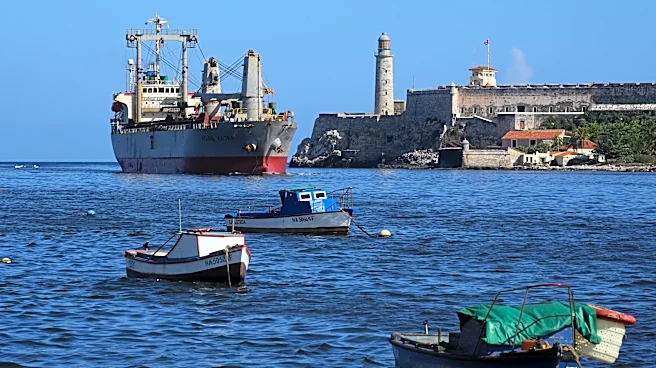
The U.S. Supreme Court has ruled that commercial cruise lines using docks in Havana, Cuba, can be held liable under the Helms-Burton Act. In an 8-1 decision, the court determined that the mere use of these docks, which were confiscated by the Cuban government
during the Communist Revolution, is sufficient to establish liability. The ruling supports claims by the Havana Docks Corporation, the former leaseholder, against cruise lines that docked at the Port of Havana. Justice Clarence Thomas wrote for the majority, emphasizing the applicability of the 1996 law that targets companies trafficking in confiscated property.
Why It's Important?
This ruling has significant implications for U.S. businesses operating in Cuba and could deter future commercial activities involving confiscated properties. The decision reinforces the Helms-Burton Act's provisions, potentially leading to increased legal actions against companies using or benefiting from such properties. It underscores the legal risks associated with engaging in business in Cuba, affecting the cruise industry and other sectors. The ruling may also influence U.S.-Cuba relations, as it highlights ongoing tensions over property rights and economic sanctions.
What's Next?
Following the Supreme Court's decision, affected cruise lines may face legal and financial repercussions, including potential compensation claims from the Havana Docks Corporation. Companies operating in Cuba will likely reassess their strategies to mitigate legal risks. The ruling could prompt legislative discussions on the Helms-Burton Act and its impact on international business operations. Additionally, diplomatic efforts may be necessary to address the broader implications for U.S.-Cuba relations and explore potential resolutions to property disputes.