







What's Happening?
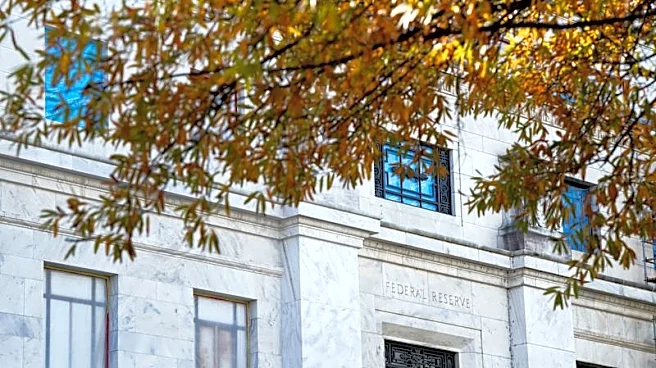
Recent data indicates that expectations for Federal Reserve rate cuts have significantly diminished. U.S. consumer inflation increased further in April, marking its largest gain in three years. This development has led markets to largely price out a rate cut this
year, with some analysts now anticipating a potential rate hike by the end of the year. According to Kyle Rodda, a senior financial market analyst at Capital.com, the stronger-than-expected inflation data has put downward pressure on gold prices, as the likelihood of a rate cut diminishes. The CME Group's FedWatch tool shows that traders now see a 30% chance of a rate hike by December.
Why It's Important?
The shift in expectations regarding Federal Reserve rate cuts is significant for several reasons. Firstly, it reflects the broader economic conditions, particularly the rising inflation, which could influence monetary policy decisions. A potential rate hike could impact various sectors, including housing and consumer spending, as borrowing costs may increase. Additionally, the diminished hopes for a rate cut have affected commodity markets, with gold prices experiencing downward pressure. This change in market sentiment highlights the interconnectedness of inflation data, monetary policy, and financial markets, affecting investors and economic stakeholders.
What's Next?
As the year progresses, market participants will closely monitor further economic data releases, particularly inflation figures, to gauge the Federal Reserve's next moves. Analysts and traders will be attentive to any signals from the Federal Reserve regarding its monetary policy stance. Additionally, geopolitical developments, such as tensions in the Middle East, could also influence market dynamics and the Federal Reserve's decision-making process. Stakeholders, including businesses and consumers, will need to prepare for potential changes in interest rates and their implications on economic activities.