



What's Happening?
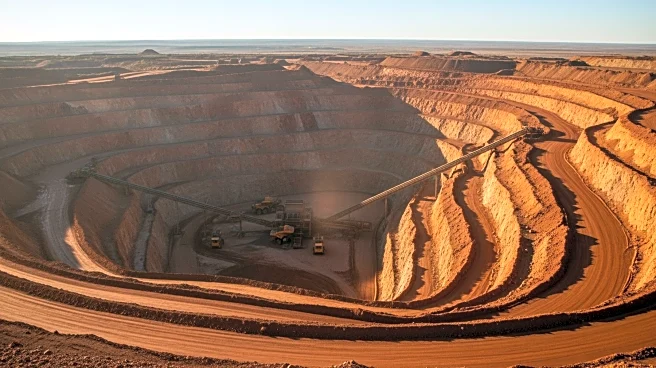
Freeport-McMoRan has submitted an environmental permit application for a $7.5 billion expansion of its El Abra copper mining operation in northern Chile. The expansion aims to quadruple the mine's production capacity, potentially adding over 300,000 metric
tons of copper annually. This project, a joint venture with Chile's state-owned Codelco, includes the construction of a new concentrator, a desalination plant, and expanded infrastructure. The El Abra mine is located in the Atacama region, one of the driest places on Earth, making the desalination plant a critical component to address water scarcity. The expansion is part of Freeport's strategy to meet the increasing global demand for copper, driven by trends in electrification and renewable energy.
Why It's Important?
The expansion of the El Abra mine is significant for several reasons. It underscores Chile's pivotal role as a leading global copper producer and highlights Freeport-McMoRan's commitment to increasing its production capacity to meet rising global demand. Copper is essential for various industries, particularly in the production of electric vehicles and renewable energy technologies. The project's success could enhance Freeport's market position and contribute to the global supply of copper. However, the project also faces challenges, including environmental concerns and the need for substantial investment. The delay in realizing production benefits until 2033 could impact investor confidence, as evidenced by the recent decline in Freeport's share price.
What's Next?
The next steps for the El Abra expansion involve securing regulatory approval and finalizing investment commitments. If these hurdles are cleared, construction and development will proceed, with commercial operations expected to begin by 2033. The project's progress will be closely monitored by investors, industry stakeholders, and environmental groups. The outcome of the permitting process and the company's ability to address environmental and community concerns will be critical in determining the project's future. Additionally, the global copper market's dynamics, influenced by geopolitical tensions and energy costs, will play a role in shaping the project's economic viability.