








What's Happening?
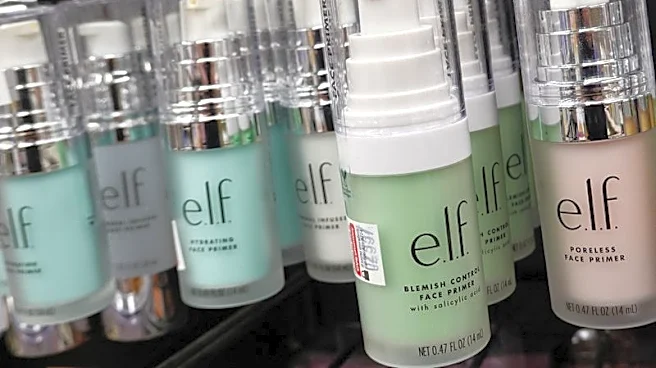
E.L.F. Beauty has announced plans to reduce prices on some of its products in response to consumer spending constraints exacerbated by tariffs and rising costs. CEO Tarang Amin highlighted that the company has observed a decline in sales as consumers
face financial pressures from increased gas prices, layoffs, and higher grocery costs. In an effort to reinforce its value proposition, E.L.F. is lowering prices on select items, starting with the popular Halo Glow Skin Tint, which saw a price drop from $18 to $14, resulting in a 40% sales increase. The company is also set to receive $55 million in refunds following a U.S. Supreme Court decision that struck down tariffs, which it plans to reinvest into the business. Previously, E.L.F. had raised prices by $1 per product due to tariffs and was involved in lawsuits against the Trump administration over these tariffs.
Why It's Important?
The decision by E.L.F. Cosmetics to lower prices is significant as it reflects broader economic challenges faced by consumers and businesses alike. With rising costs impacting consumer spending, companies are compelled to adjust pricing strategies to maintain competitiveness and market share. E.L.F.'s move could set a precedent for other companies in the beauty industry, which may also consider price adjustments to attract cost-conscious consumers. The Supreme Court's ruling on tariffs and the subsequent refunds provide financial relief that can be strategically used to stabilize pricing and support growth. This development underscores the interconnectedness of legal, economic, and consumer dynamics in shaping business strategies.
What's Next?
E.L.F. plans to continue evaluating its pricing strategy, testing which product families benefit most from price reductions. The company aims to maintain its reputation for value while navigating a challenging economic landscape. As E.L.F. reinvests its tariff refunds, it may explore further price adjustments or product innovations to enhance its market position. The broader beauty industry will likely monitor E.L.F.'s approach, potentially influencing similar strategies among competitors. Additionally, consumer responses to these changes will be crucial in determining the effectiveness of E.L.F.'s pricing adjustments.