
What's Happening?
Ford Motor Company, under the leadership of CEO Jim Farley, is continuing its push towards electric vehicles (EVs) despite significant market challenges. The company is advancing its 'Universal Electric
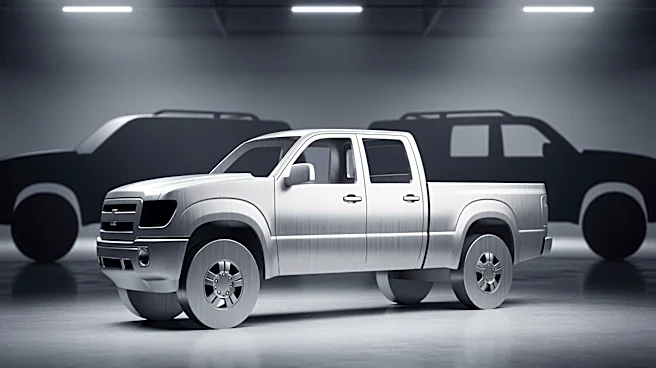
Vehicle' (UEV) platform, which aims to be cost-competitive and profitable against global EV leaders. This initiative comes as the automotive industry experiences a slowdown in EV adoption, with Ford itself incurring $19.5 billion in restructuring charges. The company is also dealing with the departure of its leading EV executive. Despite these hurdles, Ford plans to launch a $30,000 midsize pickup truck based on the UEV platform in the U.S. next year, followed by a family of vehicles. The UEV platform is expected to transform Ford's Model e EV unit from billions in losses to breakeven by 2029.
Why It's Important?
Ford's continued investment in electric vehicles is significant for the U.S. automotive industry, which is grappling with the challenges of transitioning from traditional combustion engines to electric power. The success of Ford's UEV platform could set a precedent for other automakers, influencing the industry's approach to EV production and market strategy. Additionally, Ford's focus on creating a level playing field in the U.S. market highlights the competitive pressures from international automakers, particularly from China. The outcome of Ford's strategy could impact U.S. manufacturing jobs, consumer choices, and the broader economic landscape as the country navigates the shift towards sustainable transportation.
What's Next?
Ford's next steps involve the rollout of its UEV-based midsize pickup truck and the expansion of its vehicle lineup. The company is also likely to continue seeking partnerships with other automakers to enhance its competitive edge globally. As Ford implements its UEV strategy, it will need to address the challenges of cost reduction and efficiency improvements to meet consumer price expectations. The company's ability to adapt to market conditions and technological advancements will be crucial in determining its success in the EV sector.
Beyond the Headlines
The development of Ford's UEV platform represents a broader shift in the automotive industry towards more sustainable and efficient manufacturing processes. The use of megacasting and other innovative techniques could lead to significant reductions in production costs and environmental impact. This shift also raises questions about the future of automotive labor, as new technologies may require different skill sets and potentially reduce the need for traditional manufacturing roles. Ford's approach could influence industry standards and regulatory policies related to EV production and sustainability.