





What's Happening?
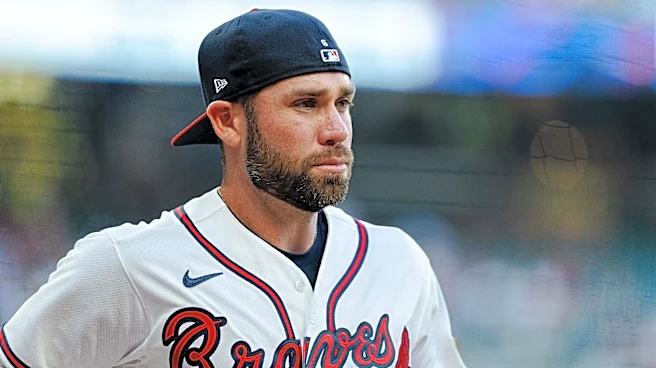
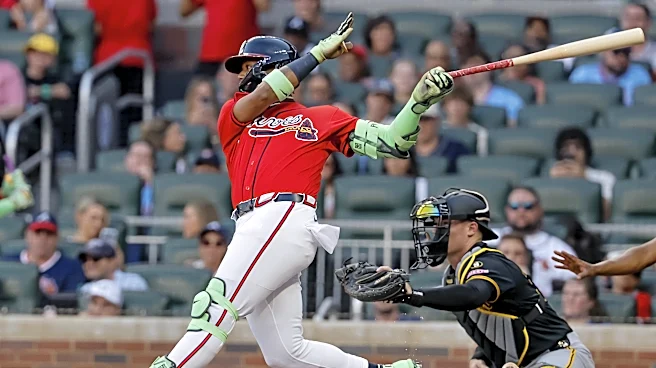
Michael Harris II, the center fielder for the Atlanta Braves, was excluded from the lineup on Saturday due to persistent back discomfort. This decision follows his removal from Friday night's game against the Pittsburgh Pirates, where he experienced back tightness.
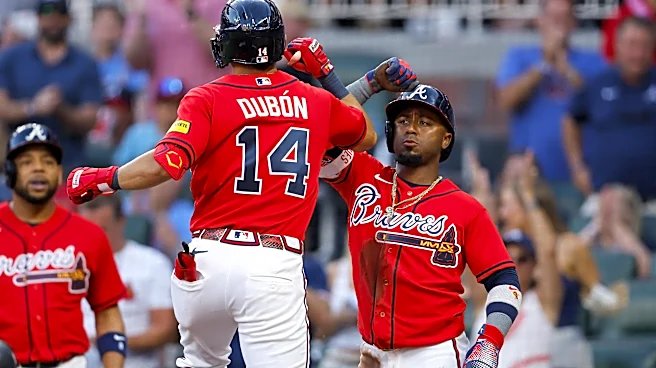
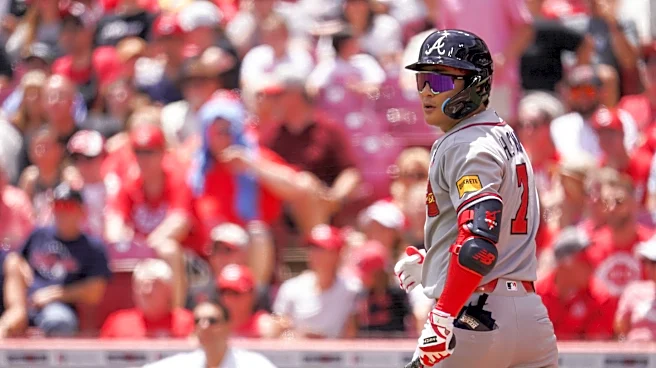
Braves manager Walt Weiss described the move as precautionary, emphasizing that the condition is not serious. Harris, who boasts a .303 batting average with 13 home runs and an .854 OPS, was replaced by Mauricio Dubón in center field. Dubón, who is on a streak of homering in three consecutive games, took over the position, allowing Weiss to utilize Ha-Seong Kim as the shortstop. Kim has struggled this season, with only five hits in 49 at-bats, and has been infrequently included in the starting lineup.
Why It's Important?
The absence of Michael Harris II from the Braves' lineup could have significant implications for the team's performance and strategy. Harris is a key player, contributing significantly to the team's offensive and defensive capabilities. His .303 batting average and 13 home runs highlight his importance to the Braves' lineup. The decision to rest him as a precautionary measure underscores the team's focus on maintaining player health over immediate game outcomes. This situation also provides an opportunity for other players, like Mauricio Dubón and Ha-Seong Kim, to step up and fill critical roles. Dubón's recent performance, including a streak of home runs, could bolster the team's offensive efforts in Harris's absence.
What's Next?
The Braves will continue to monitor Michael Harris II's condition closely, with the possibility of his return to the lineup depending on his recovery. Manager Walt Weiss indicated that Harris would receive treatment during Saturday's game, and a decision on his participation could be made during the game itself. The team will need to adjust its strategy and lineup based on Harris's availability, potentially relying more on players like Dubón and Kim. The Braves' management will likely prioritize Harris's long-term health, balancing the need for immediate performance with the risk of aggravating his condition.