








What's Happening?
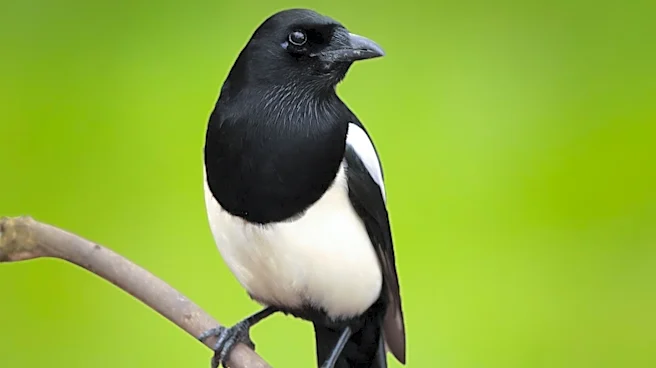
In a thought-provoking piece, the black-billed magpie, often considered a nuisance, is highlighted for its intelligence and social behaviors. The article challenges common perceptions of value in nature, urging readers to appreciate the magpie's adaptability
and social complexity. Magpies are known for their lifelong mating habits, ability to recognize human faces, and even holding 'funerals' for their dead. These behaviors suggest a level of intelligence and social structure that is often overlooked in common discourse.
Why It's Important?
This perspective encourages a shift from an anthropocentric view of nature to one that values the intrinsic qualities of wildlife. Recognizing the intelligence and social structures of animals like the magpie can lead to greater appreciation and conservation efforts. It challenges societal norms about what constitutes a 'valuable' species, potentially influencing environmental policies and educational programs. By understanding and respecting the natural world, humans can foster a more harmonious coexistence with wildlife.
Beyond the Headlines
The article invites readers to reconsider their interactions with nature, promoting a deeper understanding of ecological relationships. It highlights the ethical considerations of how humans perceive and treat other species, advocating for a more inclusive view of biodiversity. This approach could lead to long-term cultural shifts in how society values and interacts with the environment, emphasizing the importance of all species in maintaining ecological balance.