






What's Happening?
The Streetcar Project, a grassroots theater initiative, is staging a unique version of Tennessee Williams's 'A Streetcar Named Desire' in unconventional spaces, with its latest performance set in the Dupont Underground in Washington, D.C. Founded by Lucy
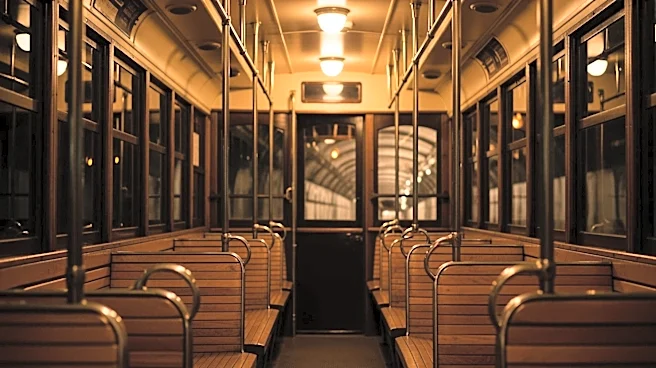
Owen and director Nick Westrate, the project aims to reinterpret the classic play by focusing on the relationship between the sisters, Blanche and Stella, rather than the traditionally dominant character of Stanley Kowalski. This production, which began during the pandemic, has been performed in various 'found' spaces such as airplane hangars, opera houses, and even bars, emphasizing the play's text with minimal props and sets. The Dupont Underground, a former streetcar tunnel turned arts venue, offers a fittingly subterranean setting for the play, aligning with the project's theme of reinvention and exploration of core themes.
Why It's Important?
This innovative approach to staging 'A Streetcar Named Desire' highlights the evolving nature of theater and its ability to adapt to new environments and interpretations. By focusing on the sisters' dynamic, the Streetcar Project challenges traditional narratives and offers audiences a fresh perspective on a well-known story. This not only revitalizes interest in classic plays but also demonstrates the resilience and creativity of the arts community in finding new ways to engage audiences. The use of unconventional spaces like the Dupont Underground also underscores the importance of accessible and diverse cultural experiences, potentially attracting a broader audience and fostering a deeper appreciation for theater.
What's Next?
The Streetcar Project's performance at the Dupont Underground is scheduled to run from April 20 to May 4, offering an intimate experience for about 100 theatergoers per show. As the project continues to explore new venues and interpretations, it may inspire similar initiatives in the theater community, encouraging more productions to experiment with non-traditional settings and narratives. The success of this project could lead to further collaborations and opportunities for artists to showcase their work in innovative ways, potentially influencing the future of theater production and audience engagement.