
What's Happening?
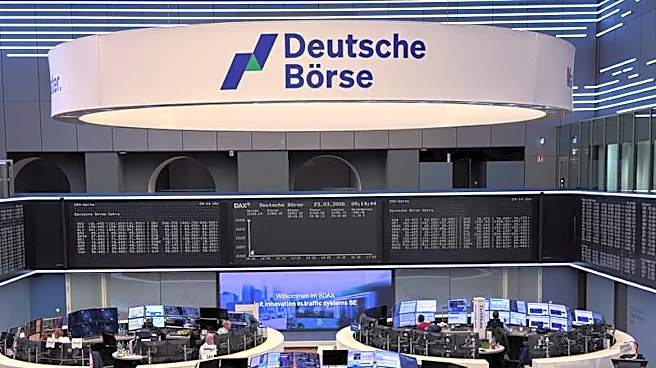
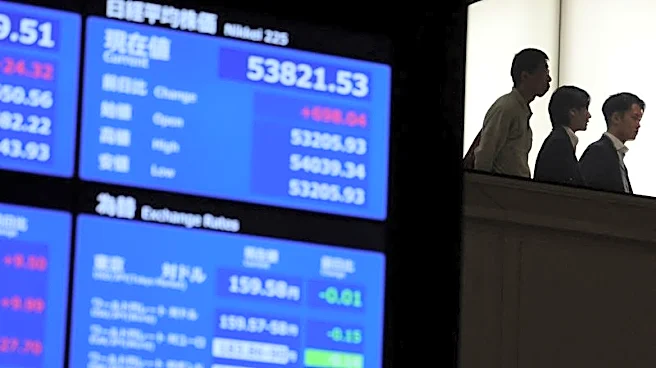
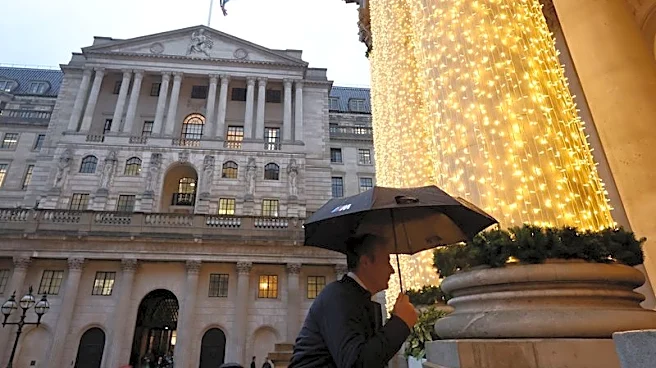
The Bank of England's Deputy Governor, Sarah Breeden, has expressed concerns about the current state of global stock markets, suggesting that they are overvalued and poised for a potential decline. In
an interview with the BBC, Breeden highlighted that asset prices are at all-time highs despite numerous risks facing the global economy. She pointed out that the ongoing U.S.-Israeli conflict with Iran has already delivered a significant shock to the global economy, leading to weaker growth, higher inflation, and increased borrowing costs. These factors, she noted, could result in simultaneous stress across government debt markets, private credit, and major U.S. technology stocks. Breeden emphasized the importance of preparing the financial system for a potential market correction, although she did not specify when such a downturn might occur.
Why It's Important?
The warning from the Bank of England's Deputy Governor is significant as it underscores the fragility of the current economic environment. A potential decline in stock markets could have widespread implications for investors, financial institutions, and the broader economy. The mention of a private credit crunch, as opposed to a banking-driven one, highlights the growing complexity and interconnectedness of financial systems. With private credit having expanded significantly over the past two decades, its untested nature at this scale poses a risk that could exacerbate economic instability. The potential for a market correction could lead to a reevaluation of asset valuations, impacting investment strategies and financial planning for both individuals and institutions.
What's Next?
While no specific timeline was provided for a potential market correction, the Bank of England is likely to continue monitoring economic indicators closely. Financial institutions may need to reassess their risk management strategies to ensure resilience in the face of potential market volatility. Policymakers could also consider implementing measures to mitigate the impact of a market downturn, such as adjusting interest rates or providing liquidity support. Investors and stakeholders will be watching for further guidance from central banks and financial authorities as they navigate the uncertain economic landscape.