



What's Happening?
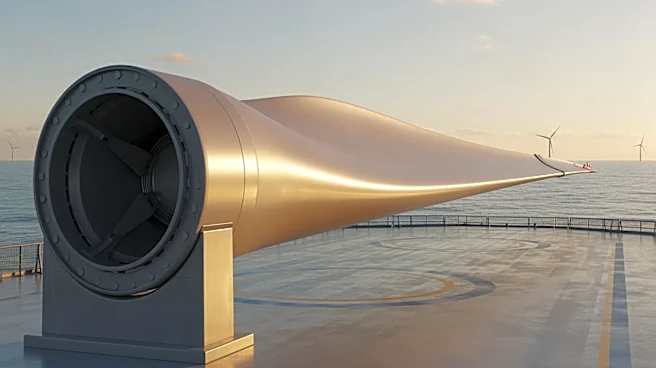
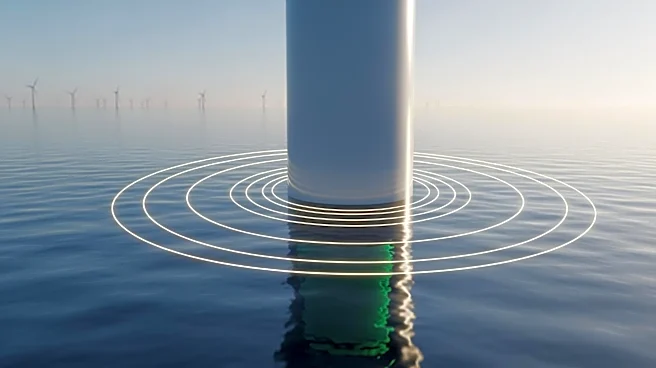
Van Oord has successfully installed three monopile foundations using a low-noise installation method at the Hollandse Kust West wind farm. This method, developed in collaboration with GBM Works and CAPE Holland, combines GBM's VibroJet technology with CAPE's
vibro lifting tool to minimize underwater noise and environmental impact. The installation was carried out using Van Oord's new offshore wind installation vessel, Boreas. The VibroJet technology uses vibrations and controlled water jets to fluidize the soil, reducing resistance and allowing the monopiles to sink under their own weight. This approach is particularly effective in the dense sand layers of the Dutch North Sea. The project aligns with Ecowende's goal of creating an ecological offshore wind farm that enhances biodiversity and minimizes impacts on marine life.
Why It's Important?
This development represents a significant advancement in sustainable offshore wind farm construction, addressing environmental concerns associated with traditional pile-driving methods. By reducing underwater noise, the new installation technique helps protect marine life, including birds, bats, and marine mammals. The success of this project could pave the way for broader adoption of low-noise installation methods in the offshore wind industry, promoting ecological harmony and sustainability. As the demand for renewable energy sources grows, innovations like this are crucial for balancing energy needs with environmental preservation.
What's Next?
The data collected during the installation will be used to validate predictive models for underwater sound and pile behavior, potentially influencing future offshore wind projects worldwide. Ecowende plans to have the wind farm fully operational by the end of 2026, contributing approximately 760 MW to the Dutch electricity grid. This project could serve as a model for future wind farms, encouraging the adoption of similar ecological practices in other regions.