
What's Happening?
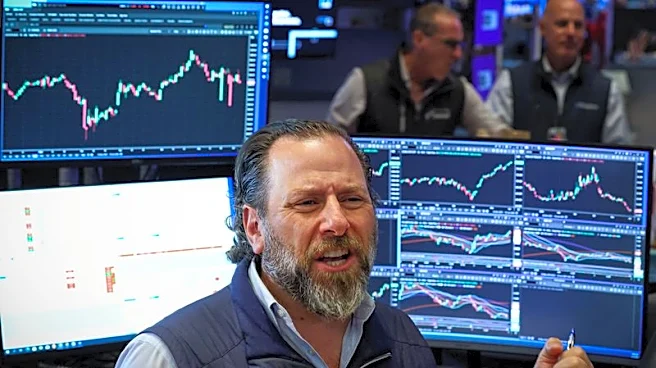
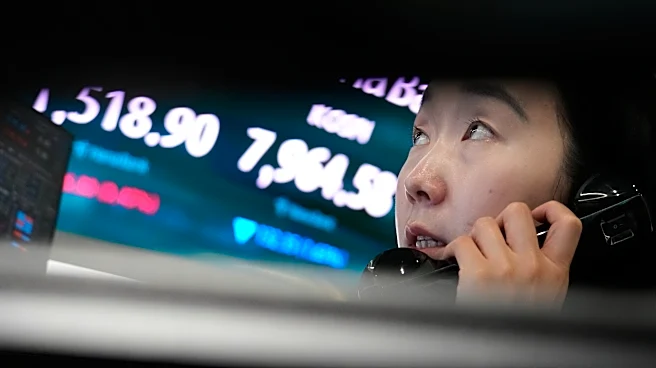
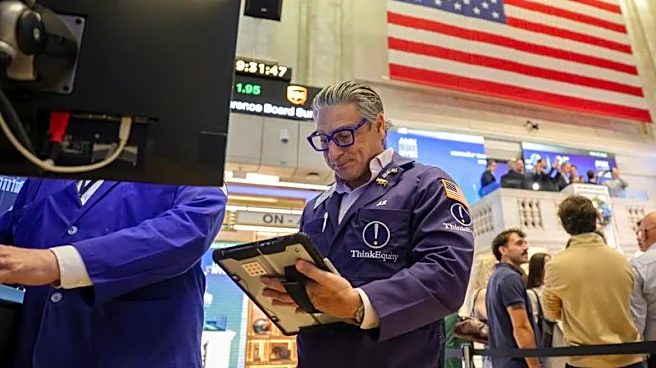
Global markets are experiencing significant volatility as they navigate the dual pressures of an AI-driven economic boom and oil price shocks resulting from the US-Iran conflict. The closure of the Strait of Hormuz has led to fluctuating oil prices, impacting
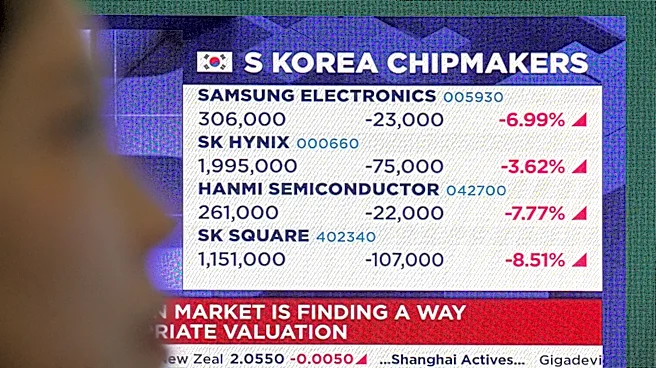
stock and bond markets worldwide. Investors are grappling with the uncertainty of when the strait might reopen, which is crucial for stabilizing oil prices. Meanwhile, AI optimism continues to drive growth in tech stocks, contributing to a complex market environment. The correlation between interest rates, inflation, and tech investments has intensified, making it challenging for investors to find safe havens. The situation is further complicated by geopolitical tensions and shifting economic forecasts.
Why It's Important?
The current market conditions highlight the delicate balance between technological advancements and geopolitical risks. The AI boom has the potential to drive significant economic growth, particularly in tech-heavy regions like Taiwan and China. However, the ongoing conflict and resulting oil price volatility pose risks of stagflation, where high inflation and stagnant growth coexist. This scenario could lead to recessionary pressures in economies not closely linked to tech, such as Germany and India. Investors are increasingly cautious, with many seeking to hedge against potential market downturns by diversifying their portfolios and investing in inflation-linked assets.
What's Next?
As the situation unfolds, investors will closely monitor developments in the US-Iran conflict and its impact on oil prices. The reopening of the Strait of Hormuz is a critical factor that could stabilize markets. Additionally, central banks worldwide, including the US Federal Reserve, may need to adjust their monetary policies in response to inflationary pressures and economic uncertainties. The interplay between AI-driven growth and geopolitical risks will continue to shape market dynamics, requiring strategic decision-making from investors and policymakers alike.