
What's Happening?
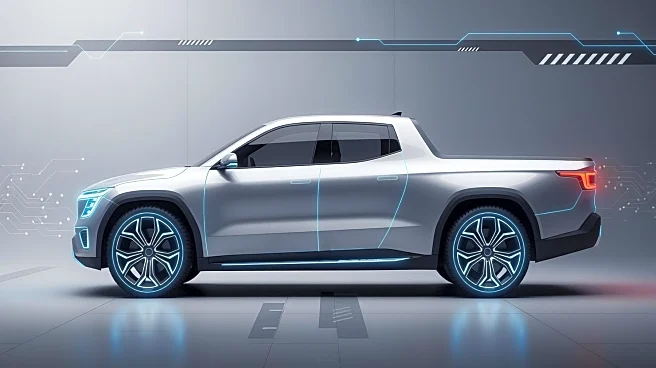
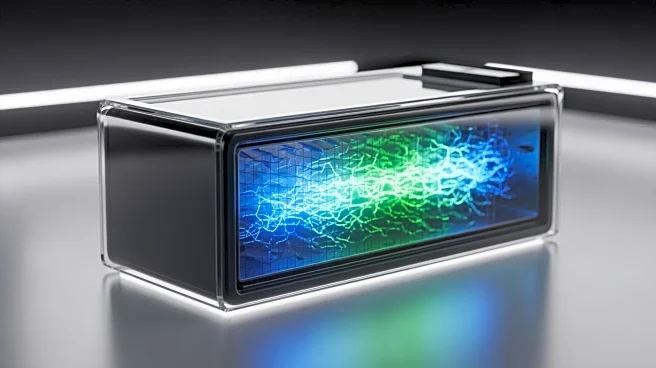
FAW, a major Chinese automotive manufacturer, has begun testing a semi-solid-state battery with an energy density of 500 Wh/kg in a prototype vehicle. This battery, developed by FAW's subsidiary China Automotive New Energy Battery (CANEB) and Nankai University, uses manganese instead of nickel, reducing costs while maintaining high energy density. The prototype battery is rated at 142 kWh, offering a range of over 1,000 km under Chinese standards. This development is part of a broader effort to advance battery technology, with FAW planning to introduce a 200 kWh version capable of nearly 700 miles per charge.
Why It's Important?
The advancement of semi-solid-state battery technology by FAW represents a significant step forward in the electric vehicle (EV) industry.
By reducing reliance on expensive materials like nickel, the cost of EV batteries can be lowered, making electric vehicles more affordable and accessible. This innovation could accelerate the adoption of EVs, contributing to global efforts to reduce carbon emissions and combat climate change. The high energy density and extended range of these batteries address common consumer concerns about EV range and charging infrastructure, potentially boosting consumer confidence and market growth.
What's Next?
FAW's testing of the semi-solid-state battery is expected to continue, with further developments anticipated in the coming years. The company plans to release a 200 kWh version, which could significantly enhance the range and performance of electric vehicles. As the technology matures, it may lead to broader adoption and integration into mass-market vehicles. The success of this technology could prompt other manufacturers to explore similar innovations, fostering competition and technological advancements in the EV sector.