






What's Happening?
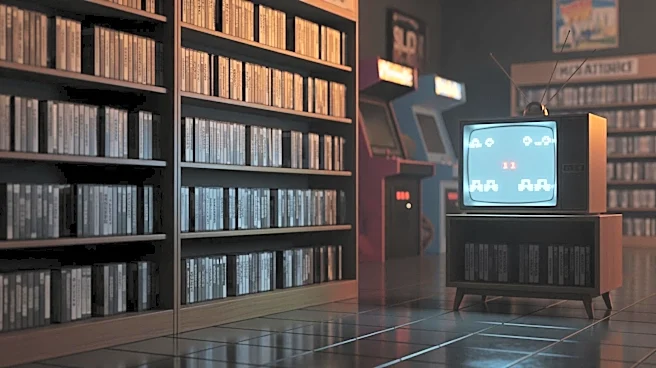
Retro Rewind: Video Store Simulator, developed by Blood Pact Studios, is a new video game that recreates the experience of working in a 1990s video rental store. Released on March 17, 2026, for Windows, the game has gained popularity on Steam as part
of a growing trend of 'work simulators.' Players assume the role of a store manager, engaging in tasks such as buying tapes, organizing the store, and managing daily operations like manning the cash register and reshelving returns. The game emphasizes a first-person perspective, offering a nostalgic yet repetitive experience reminiscent of the era's retail environment.
Why It's Important?
The release of Retro Rewind taps into a broader cultural nostalgia for the 1990s, appealing to gamers who seek a simpler, more tactile experience in contrast to modern digital entertainment. This trend reflects a desire for escapism and a return to familiar, comforting routines. The game's success highlights the potential for indie developers to capitalize on nostalgia-driven content, offering unique experiences that resonate with audiences who remember or romanticize past decades. This could influence future game development, encouraging more titles that explore historical or retro themes.
What's Next?
As Retro Rewind continues to gain traction, it may inspire other developers to create similar nostalgia-based games, potentially leading to a resurgence of interest in retro-themed entertainment. The game's reception could also prompt updates or expansions, adding new features or scenarios to enhance the player experience. Additionally, the success of such games might encourage larger studios to explore similar concepts, integrating nostalgic elements into mainstream gaming.
Beyond the Headlines
The popularity of Retro Rewind raises questions about the role of nostalgia in modern media consumption. It suggests a cultural shift towards valuing past experiences and the simplicity they represent. This trend could extend beyond gaming, influencing other entertainment sectors such as film, television, and music, where retro themes and aesthetics might become more prevalent. The game's focus on mundane tasks also highlights a growing appreciation for 'slow gaming,' where the journey and experience take precedence over fast-paced action or complex narratives.