






What's Happening?
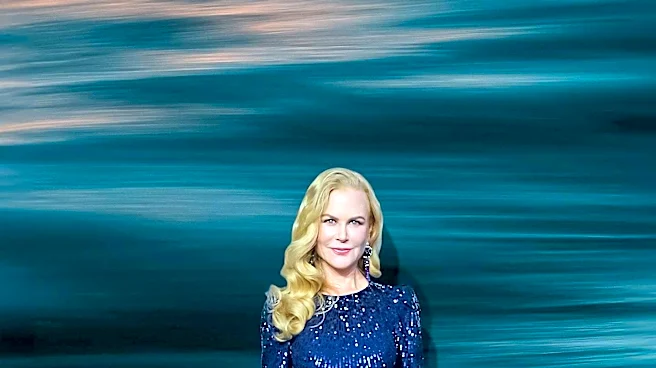
Nicole Kidman, the renowned actress, has announced her decision to train as a death doula, a role that involves providing non-medical support to individuals facing death, loss, and mortality. This revelation came during her talk at the University of San
Francisco's Silk Speaker Series. Kidman shared that her interest in this field was sparked by her personal experience with her mother's passing in 2024. She expressed a desire to offer solace and care to those in their final stages of life, a need she felt acutely during her mother's last days. The role of a death doula, as defined by the International End of Life Doula Association, includes offering psychosocial, emotional, spiritual, and practical support. Kidman joins other Hollywood figures, like director Chloe Zhao, who have also pursued this path to better understand and cope with the concept of mortality.
Why It's Important?
Nicole Kidman's decision to become a death doula highlights a growing awareness and acceptance of the need for compassionate end-of-life care. This move could influence public perception and encourage more people to consider the importance of emotional and spiritual support during the dying process. As a high-profile figure, Kidman's involvement may bring attention to the role of death doulas, potentially increasing demand for such services and inspiring others to pursue similar paths. This development also underscores a broader societal shift towards addressing death and mortality more openly, which could lead to improved end-of-life care practices and policies.
What's Next?
As Nicole Kidman embarks on her training as a death doula, it is likely that she will continue to share her experiences and insights, potentially advocating for greater recognition and integration of death doulas in healthcare settings. Her involvement may also inspire other celebrities and public figures to explore similar roles, further raising awareness about the importance of end-of-life care. Additionally, this could lead to increased interest in training programs for death doulas, as well as discussions about how to better support individuals and families during the dying process.