





What's Happening?
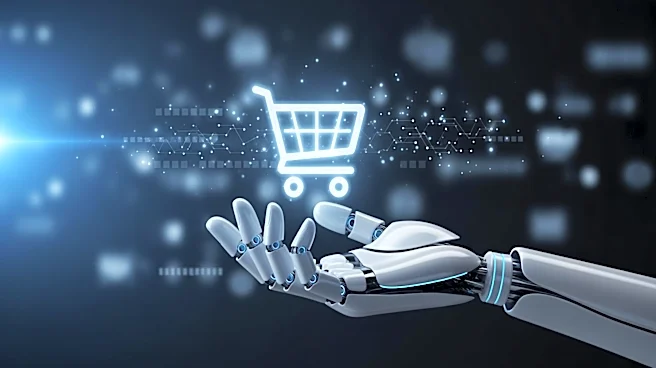
As AI agents increasingly make purchasing decisions, online marketplaces face new challenges regarding accountability, authorization, and consumer trust. eBay has updated its user agreement to ban third-party 'buy for me' agents and AI chatbots from interacting
with its platform without permission. This move highlights a broader issue of who controls transactions when software acts on behalf of buyers. Blaine Nielsen, president of retailers at Rithum, emphasizes the importance of accountability in autonomous purchasing. Despite the potential for AI to streamline shopping, only 15% of consumers have used AI to complete a purchase, indicating a lack of confidence in current AI capabilities. Marketplaces are tasked with balancing the prevention of unauthorized transactions while maintaining a frictionless experience for legitimate users.
Why It's Important?
The rise of AI buying agents represents a significant shift in e-commerce, with potential impacts on consumer trust and marketplace operations. As AI becomes more integrated into purchasing processes, marketplaces must establish clear guidelines and safeguards to protect consumers and maintain trust. The ability of AI to mimic human behavior complicates detection and accountability, posing risks of unauthorized purchases and incorrect transactions. Platforms that effectively balance automation with human oversight may gain consumer trust, while those that fail to do so risk backlash. The development of formal agent authorization frameworks could provide a solution, ensuring that AI-driven transactions are secure and compliant.
What's Next?
As AI agents become more sophisticated, marketplaces will likely move towards focusing on the authorization and trustworthiness of activities rather than merely distinguishing between human and bot interactions. This shift will require enhanced identity verification, account reputation management, and policy compliance measures. The industry may evolve towards machine-to-machine commerce, where AI agents represent both buyers and sellers, negotiating transactions autonomously. Retailers and marketplaces will need to adapt by developing intelligent agents to accurately represent their products and policies in these automated ecosystems.