



What's Happening?
Southwest Airlines has announced its decision to discontinue service from Chicago's O'Hare International Airport, effective June 4. This move comes five years after the airline began operations at O'Hare. A spokesperson for Southwest Airlines cited operational
challenges at O'Hare as a reason for the decision, emphasizing the airline's confidence in serving the Chicago area through Chicago Midway Airport. Southwest has a long-standing presence at Midway, operating there for over 41 years and offering more than 80 nonstop destinations. The airline assured that all employees affected by the discontinuation at O'Hare would have the opportunity to apply for open positions within the Southwest network, including at Midway.
Why It's Important?
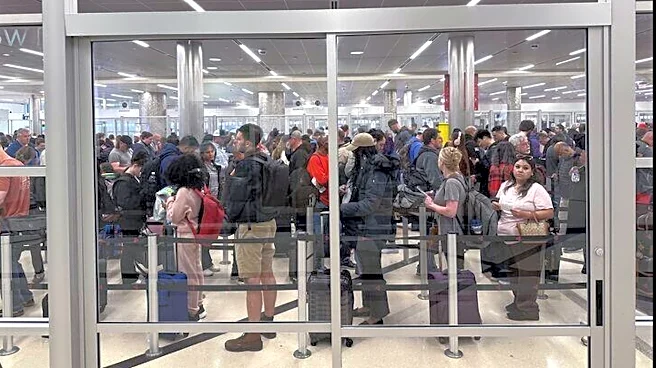
The decision by Southwest Airlines to cease operations at O'Hare highlights the competitive dynamics and logistical challenges faced by airlines at major airports. O'Hare has seen increased competition from major carriers like United Airlines and American Airlines, which have expanded their flight schedules. This competition, coupled with O'Hare's status as the busiest U.S. airfield in terms of takeoffs and landings, has intensified the struggle for gate space. The Federal Aviation Administration has also indicated that flight reductions are necessary at O'Hare due to capacity issues. Southwest's strategic focus on Midway allows it to consolidate its operations and potentially improve efficiency, while still maintaining a strong presence in the Chicago market.
What's Next?
As Southwest Airlines shifts its focus to Midway, the airline will likely work on optimizing its operations and expanding its service offerings from this airport. The move may also prompt other airlines to reassess their strategies at O'Hare, especially in light of the FAA's call for flight cuts. The ongoing modernization project at O'Hare could further influence airline operations and competition in the coming years. Stakeholders, including passengers and airport authorities, will be closely monitoring these developments to understand their impact on travel options and airport congestion.