
What's Happening?
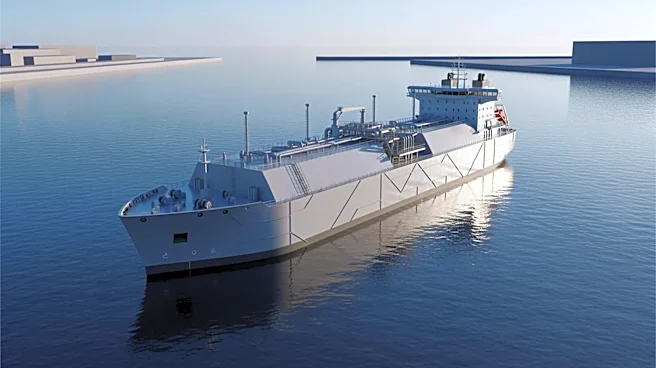
TOTE Services, headquartered in Jacksonville, Florida, is significantly contributing to the maritime sector's transition to LNG fuel through the design and construction of bunker barges. The Clean Jacksonville, the first
membrane LNG barge globally, exemplifies this innovation by offering a better space-to-weight ratio compared to older pressure vessel technology. Since its launch, TOTE has completed over 400 bunkering operations with the Clean Jacksonville. This development is part of a broader trend where the U.S. is solidifying its position as the world's largest LNG supplier, with new projects like Louisiana LNG and Corpus Christi Trains 8 & 9 reaching final investment decisions in 2025. The increased supply is expected to drive global demand, particularly in Asia, as countries invest in infrastructure to import this cleaner energy source.
Why It's Important?
The expansion of LNG infrastructure and supply in the U.S. is crucial for maintaining its leadership in the global energy market. LNG is considered the cleanest fossil fuel, producing significantly less CO2 and sulfur oxides compared to traditional fuels, making it an attractive option for meeting emissions targets. The maritime industry, including cruise and container sectors, is increasingly adopting LNG, which supports the industry's shift towards more sustainable practices. This transition not only helps reduce environmental impact but also positions the U.S. as a key player in the global energy transition, potentially boosting economic growth and creating jobs in the energy sector.
What's Next?
As the demand for LNG grows, further investments in infrastructure and technology are anticipated. Companies like TOTE Services will likely continue to innovate in bunkering operations, enhancing efficiency and safety. The U.S. may see increased collaboration with international partners to expand LNG export capabilities, further entrenching its role as a leading energy supplier. Additionally, ongoing research and development in minimizing methane emissions from LNG use will be critical in addressing climate change concerns, ensuring LNG remains a viable long-term energy solution.
Beyond the Headlines
The shift towards LNG in the maritime sector highlights broader implications for global energy policies and environmental strategies. As countries strive to meet climate goals, LNG's role as a transitional fuel could influence international agreements and regulations. The U.S.'s leadership in LNG supply may also impact geopolitical dynamics, as energy independence becomes a strategic priority for many nations. Furthermore, advancements in LNG technology could spur innovation in other sectors, driving a more comprehensive approach to sustainable energy solutions.