





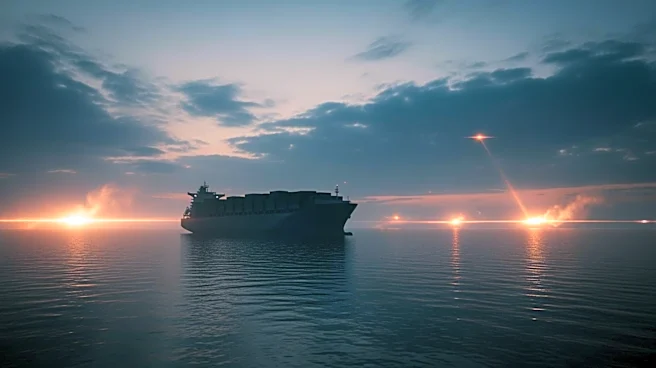
What's Happening?
Hapag-Lloyd, a major German shipping company, has reported that the ongoing crisis in the Strait of Hormuz is causing significant disruptions to shipping and supply chains. Despite a recent ceasefire agreement between the U.S. and Iran, the company estimates
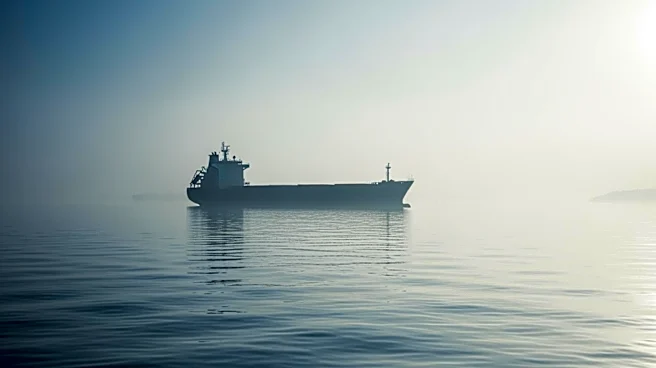
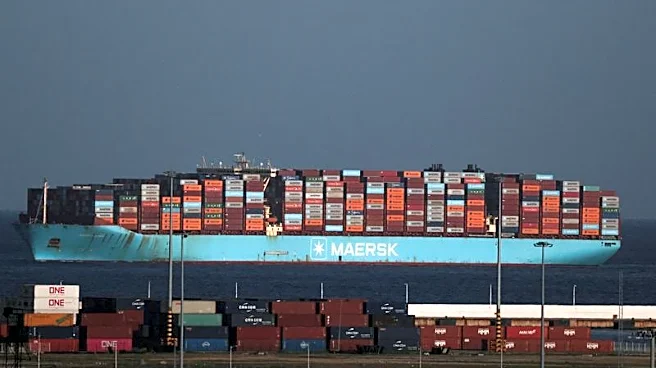
additional costs of $50 million to $60 million per week due to the crisis. CEO Rolf Habben Jansen expressed cautious optimism about resuming shipping operations but noted that it would take 6-8 weeks to return to normal traffic levels. The company plans to pass some of these increased costs onto customers. Currently, about 1,000 ships are stuck in the region, including six from Hapag-Lloyd, with a combined capacity of approximately 25,000 standard containers.
Why It's Important?
The disruption in the Strait of Hormuz, a critical chokepoint for global oil and gas shipments, has significant implications for international trade and energy markets. The increased costs faced by shipping companies like Hapag-Lloyd could lead to higher shipping rates, affecting global supply chains and potentially increasing consumer prices. The situation underscores the vulnerability of global trade routes to geopolitical tensions and the importance of ensuring maritime security. The crisis also highlights the need for contingency planning and risk management in the shipping industry.
What's Next?
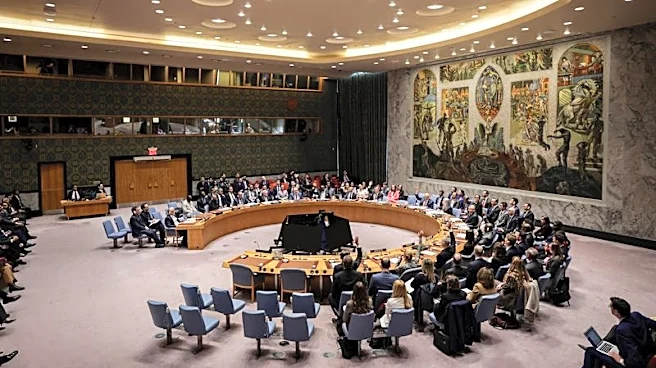
As the ceasefire holds, shipping companies will be closely monitoring the situation to assess when it is safe to resume normal operations. The industry will likely seek further security assurances before fully committing to reopening routes through the Strait of Hormuz. In the meantime, companies may explore alternative routes or logistical strategies to mitigate the impact of the crisis. The situation may also prompt discussions among international stakeholders about long-term solutions to enhance the security of critical maritime passages.