


What's Happening?
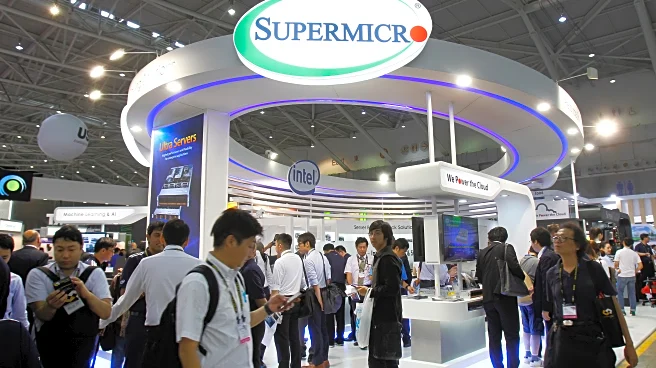
Super Micro's co-founder, Yih-Shyan 'Wally' Liaw, along with two other individuals, has been indicted for allegedly orchestrating a $2.5 billion scheme to smuggle servers containing Nvidia's advanced AI accelerator chips to China. The indictment, unsealed
on March 19, 2026, details how the accused used a front company in Southeast Asia to divert servers originally assembled in the United States. The scheme involved repackaging the servers into unmarked boxes and shipping them to China, while dummy servers were staged for audits. Liaw and another accused, Ting-Wei 'Willy' Sun, have been arrested, while Ruei-Tsang 'Steven' Chang remains a fugitive. The charges include conspiracy to violate the Export Controls Reform Act and conspiracy to defraud the government, with potential penalties of up to 30 years in prison. Super Micro, the company at the center of the scheme, has placed the involved executives on administrative leave and is cooperating with investigators.
Why It's Important?
This case highlights significant vulnerabilities in the U.S. export control system, particularly concerning high-tech components critical to national security. The alleged smuggling operation underscores the challenges in enforcing export controls, especially when economic incentives are high. The incident raises questions about the effectiveness of current compliance measures and the potential for similar schemes to undermine U.S. technological advantages. The involvement of a major company like Super Micro, which remains a significant player in the tech industry, suggests systemic issues that could impact investor confidence and regulatory scrutiny. Furthermore, the timing of the indictment coincides with a shift in U.S. policy towards relaxing certain export controls, adding complexity to the enforcement landscape.
What's Next?
The case is likely to prompt a reevaluation of export control policies and enforcement mechanisms. Congress has already increased the budget for semiconductor enforcement, indicating a bipartisan commitment to addressing these issues. The outcome of this case could influence future legislative actions aimed at tightening export controls and closing loopholes. Additionally, the tech industry may face increased regulatory scrutiny, with companies potentially revising their compliance programs to avoid similar incidents. The broader geopolitical implications, particularly in the context of U.S.-China relations, could also lead to diplomatic discussions on technology transfer and trade practices.
Beyond the Headlines
The indictment reveals deeper issues within the global supply chain and the enforcement of export controls. The use of Southeast Asian countries as transshipment points highlights regional enforcement gaps that could be exploited by other entities. This case also raises ethical questions about corporate governance and the responsibilities of multinational companies in adhering to international laws. The potential for selective enforcement of export controls, as U.S. policy shifts, could lead to inconsistencies that affect global trade dynamics. The long-term impact on the tech industry and its regulatory environment will depend on how effectively these challenges are addressed.