
What's Happening?
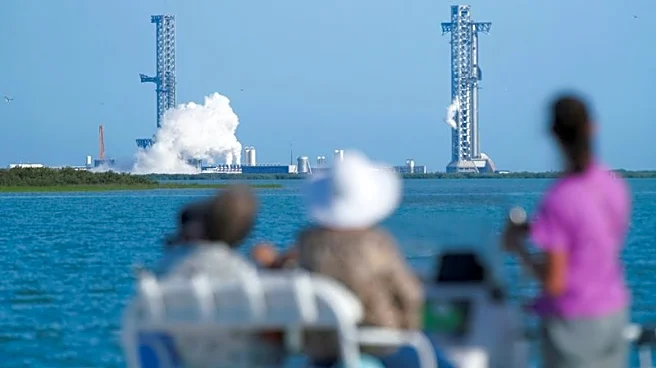
SpaceX successfully launched its Starship V3 rocket from the Starbase test site in South Texas on May 22, 2026. The launch, which took place at 6:30 p.m. EDT, marked the 12th flight of the Starship program.
The new version of the Starship, standing at 408 feet tall, is the largest and most powerful iteration to date. Key upgrades include a new fuel transfer tube, a faster satellite deployment system, and a more powerful Raptor Engine. The mission involved a suborbital flight with both the Starship Super Heavy booster and its upper stage making splashdowns. SpaceX aims to use this version of Starship for future NASA Artemis missions, including potentially landing astronauts on the moon by 2028.
Why It's Important?
The successful launch of SpaceX's Starship V3 is a significant milestone in the company's efforts to support NASA's Artemis program, which aims to return humans to the moon. The advancements in the Starship's design, such as increased power and improved systems, enhance its capability to carry out complex space missions. This development positions SpaceX as a key player in the future of lunar exploration and potentially in other deep-space missions. The competition with Blue Origin for NASA contracts underscores the importance of these technological advancements in securing future space exploration opportunities.
What's Next?
SpaceX will continue to test and refine the Starship V3 to meet NASA's requirements for the Artemis missions. The company needs to demonstrate the rocket's ability to operate in Earth orbit, transfer fuel, and support astronaut life systems. As NASA evaluates its options for the Artemis 3 mission, which may include Blue Origin's Blue Moon, SpaceX's progress will be crucial in determining its role in upcoming lunar missions. The outcome of these tests will influence NASA's decision-making and the future of U.S. lunar exploration efforts.