


What's Happening?
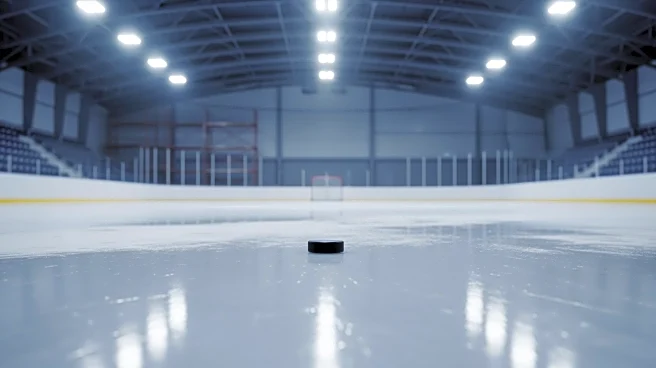
Team USA's general manager, Bill Guerin, has expressed confidence in the readiness of Milan's Santagiulia Ice Hockey Arena, the main venue for the upcoming men's hockey tournament at the Olympic Games. Despite ongoing construction issues, including incomplete dressing rooms and a practice rink without usable ice, Guerin remains unworried. The arena recently hosted a test event where a game was briefly halted due to a hole in the ice, but players and officials have downplayed the incident, attributing it to normal new ice conditions. The arena's capacity is expected to be lower than initially planned, and the ice dimensions are slightly off from NHL standards. However, Guerin and other officials believe these issues will be resolved in time for the Olympics.
Why It's Important?
The readiness of the Santagiulia Ice Hockey Arena is crucial for the successful hosting of the Olympic men's hockey tournament, a significant event in the Winter Games. Delays and construction issues could impact the quality of the games and the experience for athletes and spectators. The situation highlights the challenges of preparing Olympic venues and the importance of timely completion. For Team USA and other participating teams, the arena's readiness is vital for fair competition and player safety. The broader impact includes potential reputational risks for the organizers and the host city if the issues are not resolved promptly.
What's Next?
With the Olympics approaching, efforts to complete the arena's construction are likely to intensify. Organizers will need to address the remaining issues, such as completing dressing rooms and ensuring the ice meets standards. Stakeholders, including the NHL and the International Ice Hockey Federation, will be monitoring progress closely. The successful resolution of these issues will be critical to maintaining confidence in the event's organization. As the games draw nearer, further test events may be conducted to ensure readiness, and adjustments may be made to accommodate any remaining deficiencies.