






What's Happening?
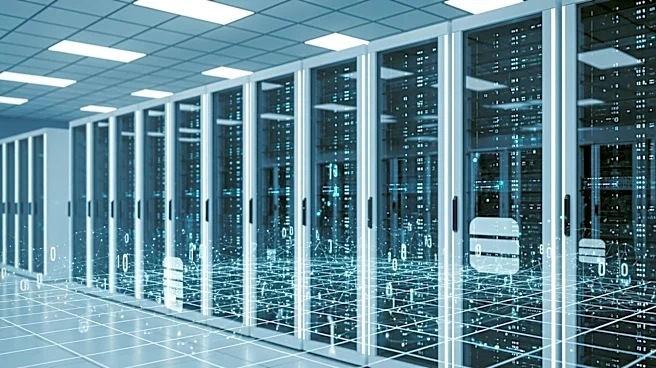
Data centers are increasingly adopting automation to improve uptime and operational resilience. The integration of advanced analytics, artificial intelligence (AI), and machine learning is transforming how data centers manage their infrastructure. These
technologies enable real-time monitoring and proactive intervention, shifting operations from reactive responses to proactive management. The focus is on achieving 'five-nines' uptime, which equates to 99.999% availability, allowing for only five minutes of downtime per year. This level of reliability is crucial as digital services become integral to various sectors, including finance and transportation. The industry is moving away from traditional redundancy models, such as the 2N model, towards more modular and value-engineered architectures. These new models maintain availability while reducing costs and improving efficiency. However, a critical vulnerability remains in the control and automation layers, which are often not designed with the same level of redundancy as mechanical and electrical systems.
Why It's Important?
The shift towards automation in data centers is significant for several reasons. As digital infrastructure becomes more complex, the demand for uninterrupted service grows. Automation provides the necessary tools to manage this complexity, ensuring that data centers can meet the high expectations for availability. This is particularly important as outages can have widespread impacts, affecting millions of users and disrupting essential services. By embedding resilience into the control systems, data centers can better handle operational risks associated with aging infrastructure, AI-driven workloads, and renewable energy integration. This approach not only enhances reliability but also reduces the likelihood of human error, which is a common cause of outages. The move towards intelligent automation is a strategic response to the increasing operational risks and the need for higher uptime standards.
What's Next?
As data centers continue to evolve, the focus will likely remain on enhancing automation and control systems. Operators may invest in standardized reference architectures to reduce design risks and ensure alignment with international standards. This could lead to faster deployment and more resilient systems. Additionally, the industry may see increased collaboration with infrastructure providers to develop solutions that address the unique challenges of modern data centers. As expectations for availability continue to rise, data centers will need to prioritize automation as a foundational element of their design. This will involve not only technological advancements but also changes in how data centers are managed and operated. The ongoing integration of AI and machine learning will play a crucial role in this transformation, providing the insights needed to anticipate and mitigate potential failures.
Beyond the Headlines
The adoption of automation in data centers has broader implications beyond just operational efficiency. It represents a shift in how critical infrastructure is perceived and managed. By treating automation as a core component rather than a secondary system, data centers can achieve greater stability and reliability. This shift also highlights the growing importance of digital infrastructure in supporting essential services and the economy. As data centers become more automated, there may be ethical and regulatory considerations regarding data privacy and security. Ensuring that these systems are secure and compliant with regulations will be crucial as they become more integral to daily operations. Additionally, the move towards automation may impact the workforce, requiring new skills and potentially reducing the need for manual intervention.