





What's Happening?
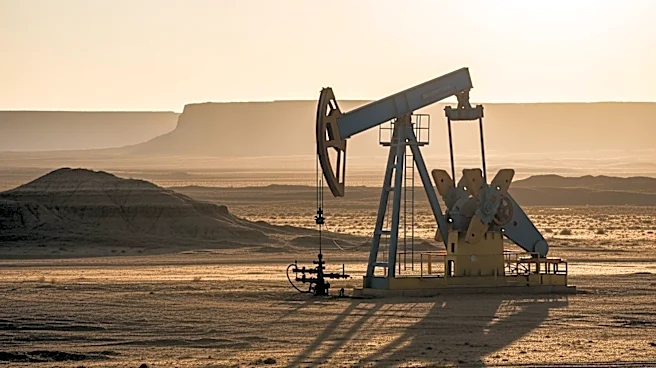
The Permian Basin, the largest oil-producing region in the U.S., continues to see steady production levels despite global oil price fluctuations. In 2025, the basin was responsible for nearly half of the country's oil output, even as fewer new wells were
drilled compared to previous years. Operators are focusing on efficiency and technology to maintain production levels, with predictions suggesting that the 2025 production average of 6.6 million barrels per day will remain largely unchanged in 2026. The Bureau of Land Management (BLM) has been active in leasing land for oil and gas exploration, with significant sales in New Mexico and Oklahoma. Additionally, natural gas production in the Permian Basin is expected to grow, driven by associated gas from oil drilling. However, capacity constraints have led to record low prices for natural gas in the region.
Why It's Important?
The steady production in the Permian Basin is crucial for the U.S. energy sector, as it helps stabilize domestic oil supply amid global market disruptions. The focus on efficiency and technology by operators ensures that production remains viable even with fewer new wells being drilled. The BLM's leasing activities indicate continued investment in the region, which could lead to increased exploration and production. The growth in natural gas production highlights the importance of infrastructure development to manage capacity constraints and prevent price volatility. These developments have significant implications for energy policy, economic stability, and the strategic positioning of the U.S. in global energy markets.
What's Next?
Operators in the Permian Basin are likely to continue focusing on efficiency and technological advancements to maintain production levels. The BLM's upcoming bidding rounds for oil and gas parcels in New Mexico, Texas, and Oklahoma could lead to increased exploration activities. Additionally, infrastructure projects such as pipeline expansions are expected to alleviate capacity constraints and stabilize natural gas prices. Stakeholders, including energy companies and policymakers, will need to address challenges related to production costs, environmental impact, and market volatility to ensure sustainable growth in the region.
Beyond the Headlines
The focus on efficiency and technology in the Permian Basin reflects broader trends in the energy industry, where operators are increasingly prioritizing sustainable practices and cost-effective production methods. The challenges of managing excess water and capacity constraints highlight the need for innovative solutions, such as utilizing excess water for data centers. These developments could lead to new revenue streams and reduce dependency on volatile oil and gas markets. The strategic importance of the Permian Basin in the U.S. energy landscape underscores the need for continued investment in infrastructure and technology to support long-term growth.