
What's Happening?
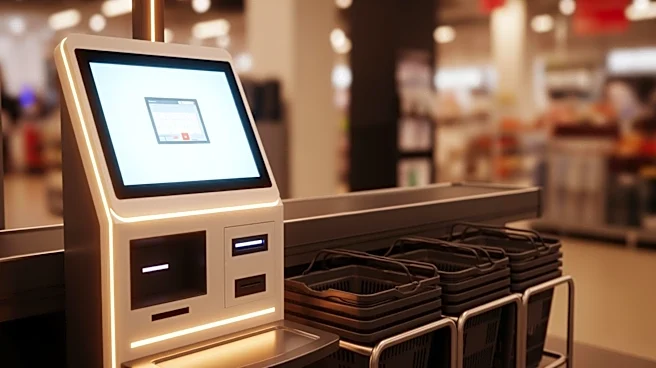
Retailers in the U.S. are increasingly adopting self-service technologies to improve customer experience and streamline store operations, according to a report by Coresight Research. The report highlights
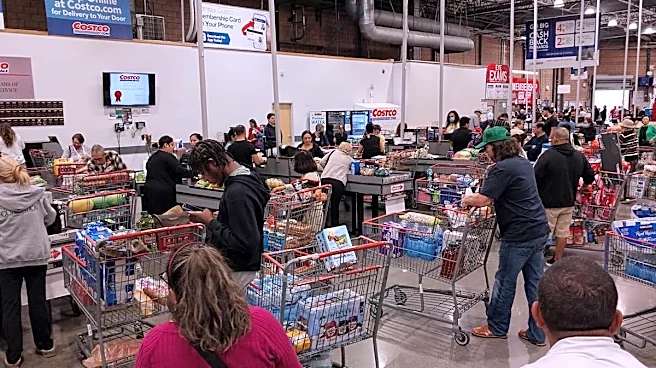
that self-service systems, such as kiosks, self-checkout terminals, and smart carts, are becoming essential infrastructure rather than mere convenience tools. Retailers are deploying an average of 3.5 different self-service formats to support the entire shopping journey. The adoption of these technologies is driven by the need to reduce retail 'friction,' such as checkout delays and product-search difficulties. The report also notes that self-service systems are evolving into customer engagement tools, providing product comparisons, loyalty integration, and promotions. Despite challenges like increased shrink, retailers continue to invest in these technologies, viewing them as critical to enhancing customer satisfaction and operational efficiency.
Why It's Important?
The expansion of self-service technologies in retail is significant as it addresses key challenges such as labor shortages and customer dissatisfaction with traditional checkout processes. By improving the shopping experience, retailers can increase basket sizes, customer retention, and loyalty. The operational benefits include reduced staffing requirements and improved inventory management, which can lead to cost savings and better resource allocation. As self-service systems become more integrated with other retail technologies, they offer valuable data insights that can enhance decision-making and operational efficiency. This trend reflects a broader shift towards digital transformation in the retail sector, with potential long-term impacts on how consumers interact with stores and make purchasing decisions.
What's Next?
Retailers are expected to continue investing in self-service technologies, with future developments likely to include the integration of AI, RFID, and computer vision technologies. These advancements could further transform the self-service landscape, providing even more sophisticated customer engagement and data collection capabilities. As retailers navigate challenges like shrink and system integration, they will need to focus on creating seamless, interoperable technology ecosystems. The ongoing evolution of self-service systems will likely lead to new opportunities for enhancing customer experience and operational efficiency, positioning retailers to better compete in a rapidly changing market.