






What's Happening?
Troilus Mining Corp has received approval from Hydro-Québec and Quebec’s Ministère de l'Économie, de l'Innovation et de l'Énergie (MEIE) for a 70 megawatts power allocation. This allocation is intended to support the development and operation of the Troilus Project,
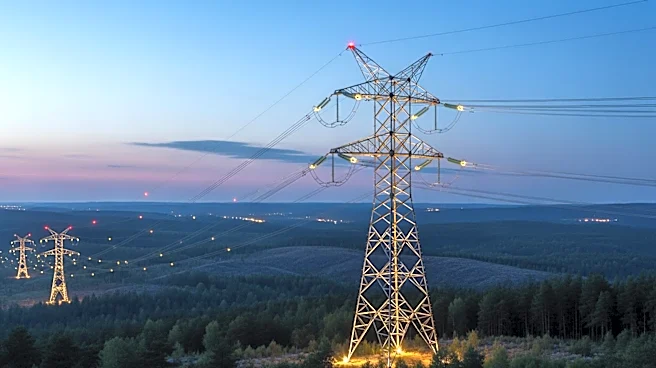
a copper-gold mining initiative in north-central Quebec. The power allocation is a significant milestone for the project, which is one of Quebec's next large-scale critical minerals projects. The request for power was submitted in early 2025, and the approval follows continuous engagement with Hydro-Québec and government stakeholders. The project benefits from existing infrastructure, including 107 kilometers of high-tension powerlines connected to a substation at the site. The access to Quebec’s low-carbon hydroelectric grid is expected to contribute to the project's emissions reduction goals and provide reliable, competitively priced renewable energy.
Why It's Important?
The power allocation is crucial for the Troilus Project, which is poised to become a significant contributor to Quebec's economy and the critical minerals sector. The project is expected to generate substantial economic benefits, including approximately 1,000 direct jobs during construction and over 680 permanent jobs during operations. The allocation de-risks the project by ensuring a stable power supply, which is essential for the project's development and operational phases. Additionally, the use of hydroelectric power aligns with environmental goals, supporting long-term emissions reduction objectives. This development underscores the strategic importance of the Troilus Project within Quebec's industrial landscape, particularly in the context of increasing demand for critical minerals.
What's Next?
With the power allocation secured, Troilus Mining Corp will continue advancing the project's permitting, detailed engineering, and financing efforts. The focus will be on moving towards the next stages of development, with the aim of commencing construction and eventually production. The project is positioned to support domestic copper supply and contribute to regional development in Northern Quebec. Stakeholders, including local communities and government entities, will likely monitor the project's progress closely, given its potential economic and environmental impacts.