



What's Happening?
A recent report from the University of Idaho reveals that the state's agriculture sector has reached a record economic impact of $44.5 billion in 2024. This figure represents 17.2% of Idaho's total economic output, underscoring the sector's significant
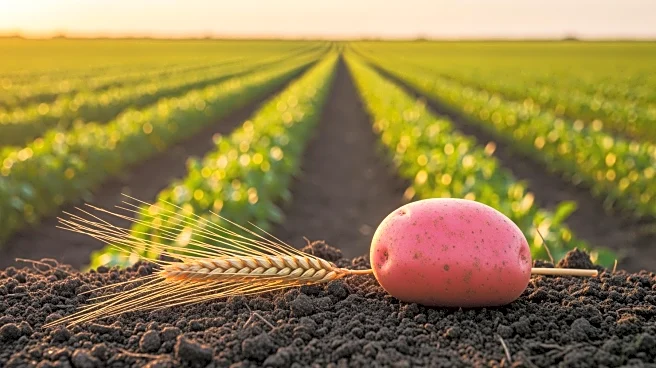
role in the state's economy. The study, titled 'Economic Contribution of Idaho Agribusiness 2025,' was conducted by Philip Watson, a professor in the Department of Agricultural Economics and Rural Sociology. It highlights that agriculture supports 137,900 jobs in Idaho, accounting for about one in every nine jobs. The report also notes that Idaho ranks among the top states in the production of various commodities, including potatoes, barley, and peppermint oil. The growth in the state's food processing capacity has contributed to this economic impact, with more commodities being processed locally rather than exported as raw materials.
Why It's Important?
The findings of the University of Idaho report are significant as they highlight the growing importance of agriculture in the state's economy. The sector's contribution to the economy has increased from $37.5 billion in 2022, reflecting a robust growth trajectory. This growth is crucial for Idaho, as it not only supports a large number of jobs but also enhances the state's economic resilience by diversifying its economic base. The increase in local food processing capacity indicates a maturing agricultural industry, which can lead to more value-added production and potentially higher economic returns. This development is beneficial for local farmers and businesses, as it allows them to capture more value within the state, rather than relying on exports.
What's Next?
The report suggests that Idaho's agricultural sector will continue to play a vital role in the state's economy. As the industry matures, there may be further opportunities for growth in food processing and value-added production. This could lead to increased investment in infrastructure and technology to support these activities. Additionally, the report's findings may influence state policy and legislative priorities, as stakeholders seek to capitalize on the sector's economic potential. The University of Idaho plans to continue updating the report every three years to track the sector's progress and its impact on the state's economy.
Beyond the Headlines
The report's findings also have broader implications for Idaho's economic strategy. By highlighting the interconnectedness of agriculture with other sectors, the report underscores the need for a holistic approach to economic development. This includes investing in education and workforce development to ensure that the state has the skilled labor needed to support a growing agricultural industry. Furthermore, the emphasis on local processing aligns with sustainability goals, as it reduces the carbon footprint associated with transporting raw materials out of state. This could enhance Idaho's reputation as a leader in sustainable agriculture.