






What's Happening?
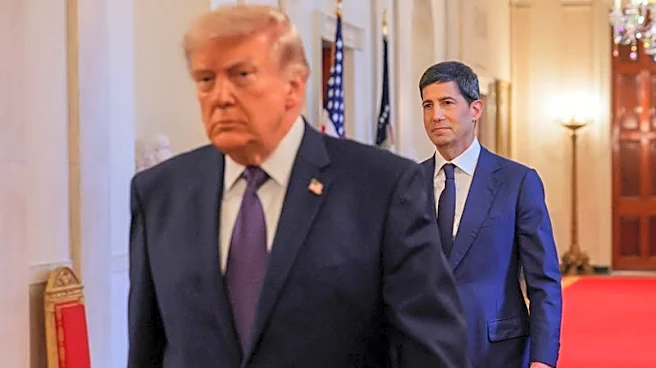
Kevin Warsh, the newly appointed Chair of the Federal Reserve, has announced a reform-oriented agenda during his swearing-in ceremony at the White House. Warsh, who succeeds Jerome Powell, emphasized his commitment to price stability and maximum employment.
He criticized the Fed's current balance sheet, which has grown significantly since 2008, and proposed selling off assets to reduce the Fed's market intervention. Warsh also suggested redefining inflation targets, moving away from the rigid 2% goal to allow more flexibility in monetary policy. These changes could lead to increased borrowing costs as bond prices fall and yields rise, potentially impacting the stock market.
Why It's Important?
Warsh's proposed reforms could have significant implications for the U.S. economy and financial markets. By reducing the Fed's balance sheet, borrowing costs may increase, affecting businesses and consumers reliant on low-interest rates. The shift in inflation targeting could lead to less predictability in monetary policy, impacting investor confidence and market stability. These changes may challenge the current economic environment, which has been characterized by low interest rates and high market valuations. Stakeholders, including businesses and investors, will need to adapt to a potentially more volatile economic landscape.
What's Next?
As Warsh implements his reform agenda, the Federal Reserve's actions will be closely monitored by financial markets and policymakers. The potential sale of assets and changes in inflation targeting could lead to debates among economists and political leaders about the best path forward for monetary policy. The impact on interest rates and market stability will be key areas of focus, with potential reactions from businesses and investors as they adjust to the new economic conditions. The Federal Open Market Committee's future meetings will provide further insights into Warsh's approach and its implications for the U.S. economy.