


What's Happening?
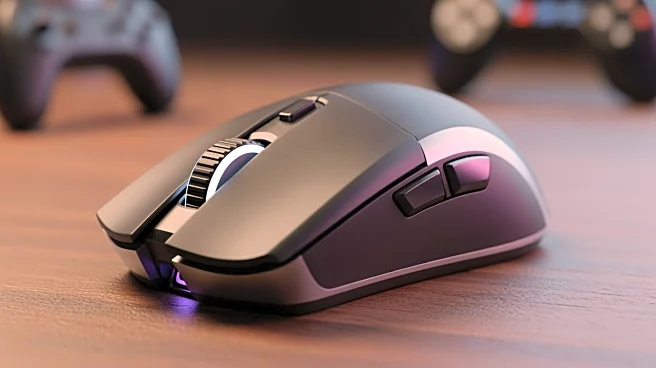
The Retro R8 gaming mouse, designed by 8BitDo, has gained attention for its unique aesthetic and practical features. Priced at $50, with discounts bringing it as low as $35, the mouse offers a retro NES-style design with a combination of whites, greys, reds, and blacks. It includes a charging dock that doubles as a wireless receiver, enhancing its functionality. The mouse boasts a high polling rate of 8,000 Hz, a sensitivity of 26,000 DPI, and a speed of 650 IPS. It provides up to 100 hours of battery life in Bluetooth mode and between 26 to 105 hours in 2.4 GHz mode. The design includes niche features like side buttons that are sunk into the mouse, making it stand out in the market.
Why It's Important?
The Retro R8's success highlights a growing trend of nostalgia
in technology, where consumers are drawn to products that combine modern functionality with retro aesthetics. This trend is significant as it reflects a shift in consumer preferences, potentially influencing future product designs in the tech industry. The mouse's affordability and unique design could disrupt the market by appealing to both budget-conscious consumers and those seeking distinctive tech accessories. This could lead to increased competition among manufacturers to innovate and cater to niche markets, ultimately benefiting consumers with more diverse product offerings.
What's Next?
As the Retro R8 continues to gain popularity, it may inspire other tech companies to explore similar retro-themed designs. This could lead to a broader range of products that blend nostalgia with modern technology, potentially expanding the market for retro-inspired tech. Additionally, the success of the R8 might encourage 8BitDo to develop more products with similar themes, further establishing their brand in the gaming accessory market. The trend could also influence other industries, prompting a resurgence of retro designs in various consumer goods.
Beyond the Headlines
The appeal of the Retro R8 goes beyond its technical specifications, tapping into a cultural nostalgia for the early 2000s. This reflects a broader societal trend where consumers seek comfort in familiar designs from the past, possibly as a response to the rapid pace of technological change. The mouse's design not only serves a functional purpose but also evokes a sense of nostalgia, making it a conversation piece and a statement of personal style. This cultural dimension adds depth to the product's appeal, suggesting that future tech innovations may increasingly consider aesthetic and emotional factors alongside technical performance.