
What's Happening?
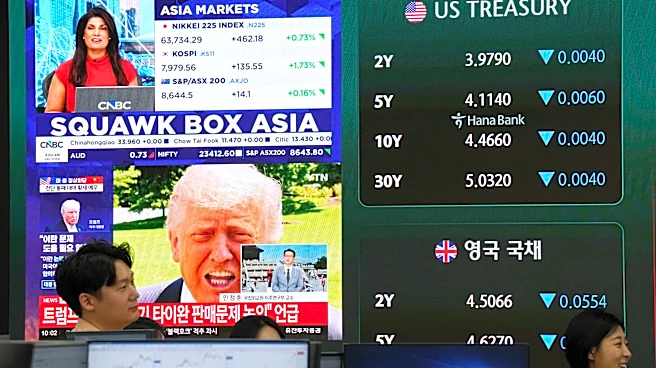
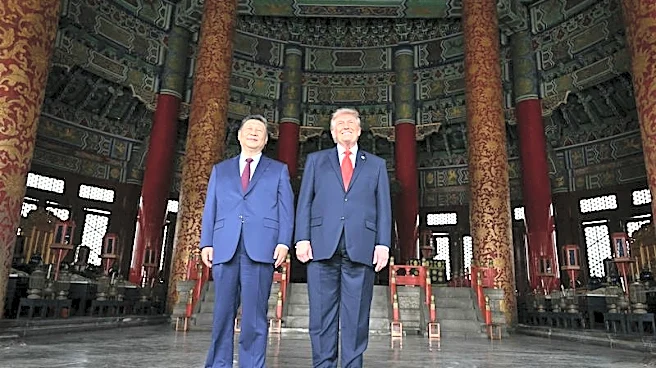
Gold prices remained largely stable as investors focused on a meeting between U.S. President Trump and Chinese President Xi Jinping. The meeting, which is part of a two-day summit, comes amid rising U.S. inflation
driven by increased energy costs linked to the Iran war. Spot gold saw a slight increase of 0.2% to $4,696.36 per ounce, while U.S. gold futures for June delivery fell by 0.1% to $4,703.70. The discussions between Trump and Xi are reportedly making progress, although disagreements over Taiwan could potentially harm relations. Recent data showed U.S. producer prices experienced their largest increase in four years, signaling accelerating inflation. This has led traders to largely dismiss the possibility of U.S. interest rate cuts this year, with a 29% chance of a rate hike by December according to CME Group's FedWatch tool.
Why It's Important?
The stability of gold prices amid geopolitical and economic developments highlights the metal's role as a hedge against inflation. Rising U.S. inflation, driven by energy costs, poses challenges for the Federal Reserve, which is under pressure to manage interest rates. The approval of Kevin Warsh as chair of the Federal Reserve adds another layer of complexity, as the central bank navigates these inflationary pressures. The outcome of the Trump-Xi meeting could have significant implications for U.S.-China trade relations, particularly if tensions over Taiwan escalate. The broader economic impact includes potential shifts in trade policies and market reactions to interest rate decisions, affecting investors and industries reliant on stable economic conditions.
What's Next?
The ongoing summit between President Trump and President Xi is expected to continue influencing market dynamics, particularly if any significant agreements or conflicts arise. The Federal Reserve's approach to managing inflation and interest rates will be closely watched, as any changes could impact economic growth and investment strategies. Additionally, the geopolitical landscape, especially regarding U.S.-China relations and Taiwan, will remain a critical factor for global markets. Investors and policymakers will need to monitor these developments to anticipate potential economic shifts and adjust strategies accordingly.