



What's Happening?
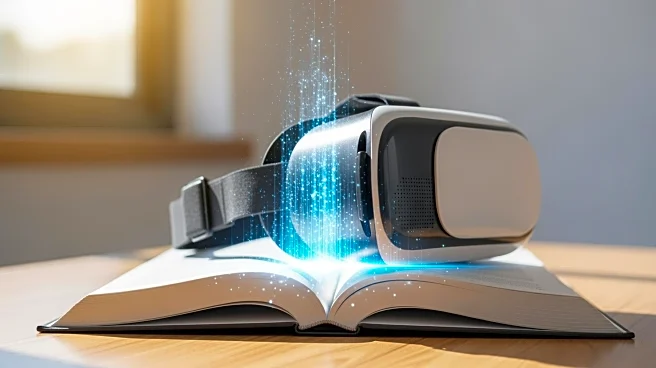
Recent developments in higher education highlight the transformative impact of Meta's Quest VR headset on experiential learning. According to a report by EdTech Magazine, immersive learning technologies like the Quest VR are providing students with virtual and mixed reality environments that enhance their educational experiences. This technology is particularly beneficial for institutions facing budget and resource constraints, as it offers a cost-effective way to provide experiential learning opportunities. The National Association of Colleges and Employers' Early Career Talent Survey indicates that students who engage in experiential learning tend to progress faster in their careers, report higher job satisfaction, and earn salaries averaging
$15,000 more than their peers who do not participate in such learning experiences.
Why It's Important?
The integration of VR technology in higher education is significant as it addresses the challenge of providing experiential learning opportunities in a resource-constrained environment. By enhancing student engagement and preparing them for future careers, VR technology can potentially improve educational outcomes and career prospects. This shift towards immersive learning could lead to a more skilled workforce, benefiting industries that require practical experience. Additionally, the increased career satisfaction and higher salaries reported by students who engage in experiential learning suggest that VR technology could play a crucial role in shaping the future of education and employment.
What's Next?
As VR technology continues to evolve, more educational institutions may adopt these tools to enhance their curricula. The success of Meta's Quest VR in engaging students could encourage other tech companies to develop similar educational technologies, leading to increased competition and innovation in the field. Educational policymakers and institutions might also explore partnerships with tech companies to integrate VR into their programs, potentially leading to new standards and practices in experiential learning. The ongoing development of VR technology could further expand its applications beyond education, influencing various sectors such as healthcare, engineering, and the arts.