
What's Happening?
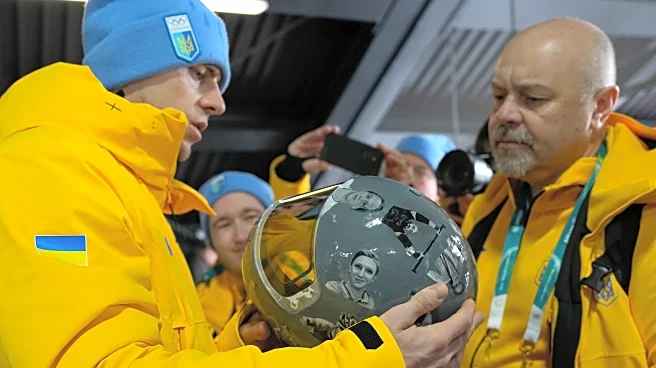
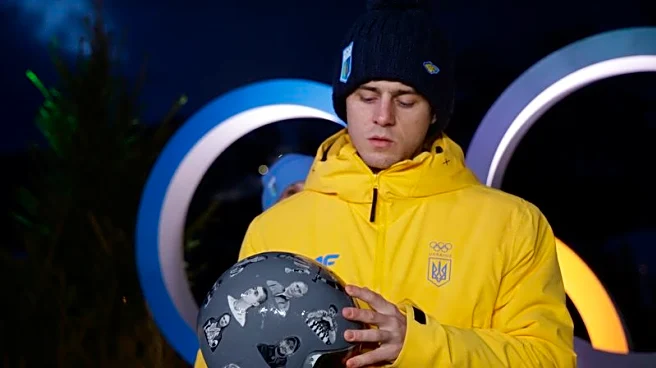
The International Olympic Committee (IOC) has banned Ukrainian skeleton pilot Vladyslav Heraskevych from competing at the Winter Olympics for wearing a helmet featuring images of athletes killed during
Russia's invasion of Ukraine. The IOC stated that the helmet violated the Olympic Charter, which prohibits political demonstrations. Despite being informed of the ban, Heraskevych wore the helmet during training, asserting his right to honor his fallen compatriots. The IOC emphasized that the decision was based on rule violations rather than political propaganda.
Why It's Important?
This incident underscores the ongoing conflict between sports and politics, particularly in the context of the Russia-Ukraine war. The IOC's decision highlights the challenges of maintaining neutrality in international sports events while respecting athletes' rights to express personal and national grief. The ban could have broader implications for how political expressions are managed in future Olympic Games, potentially affecting athletes from other conflict-affected regions.
What's Next?
Heraskevych has filed an urgent appeal with the Court of Arbitration for Sport (CAS) against the IOC's decision. The outcome of this appeal could set a precedent for how similar cases are handled in the future. The IOC may also face increased scrutiny and pressure to clarify its guidelines on political expressions, balancing the need for neutrality with athletes' rights to personal expression.